Automation planning
Automated Laser Cleaning Fixtures: A Workpiece Positioning Checklist Before Your RFQ
Prepare your automated laser cleaning fixture RFQ with a checklist for part datums, clamping, cleaning-zone access, loading orientation and changeover.
8 min read
Before requesting a quote for automated laser cleaning fixtures, prepare a part-family drawing, mark the cleaning and permitted contact areas, and describe loading orientation and changeover needs. Ask the supplier to separate what is already defined from what still needs a fixture-design decision or application trial. The checklist below helps you prepare that conversation; it is not a finished fixture design.
Start with the part family and drawing references
A useful RFQ starts with the parts the fixture must accommodate. Send the current drawing revisions and identify the features used as references for positioning. If a part has no controlled drawing, flag that gap and provide annotated photographs or measurements for review rather than presenting a photograph as a complete dimensional specification.
Describe the incoming condition as well as the nominal geometry. Include known variation in the locating features, differences between revisions, and any surfaces where contact is restricted. Ask the designer which of those differences matter to seating and which need representative parts to resolve. Do not assume that parts grouped under one product name can use the same fixture unchanged.
For an illustrative example, imagine two bracket variants with similar outer profiles but different hole locations. The RFQ should identify that difference and ask whether the same reference features remain usable. It should leave the choice between one fixture, interchangeable inserts or separate fixtures open until the geometry and access requirements have been reviewed.
Separate locating from clamping
Locating and clamping answer different questions. The locators establish the workpiece reference; the clamps retain the workpiece in that seated position. Carr Lane's workholding guidance makes this distinction and discusses how support and clamp placement affect the part. Use that distinction to ask the supplier to explain both the seating method and the restraint method.
On the drawing, identify the proposed reference features and any areas that must remain free of clamp contact. Then ask how the operator or loading system will confirm that the part is seated before cleaning starts. If a clamp closes, what evidence shows the part is on its intended references? Record the answer as a requirement or an open question, without assuming that a closed clamp proves correct positioning.
Clamping can bend or mark a workpiece, so flag thin sections, unsupported areas and cosmetic or functional contact restrictions for review. Ask where the clamp force is supported and what evidence is needed to assess the proposed restraint. A general machining-fixture guide does not establish the right clamping force or positional tolerance for your laser-cleaning application; those values belong in the part-specific design review.
Evidence: Carr Lane: locating and clamping principles. General workholding guidance; its machining-load examples are not laser-cleaning specifications.
Mark cleaning zones and fixture contact areas together
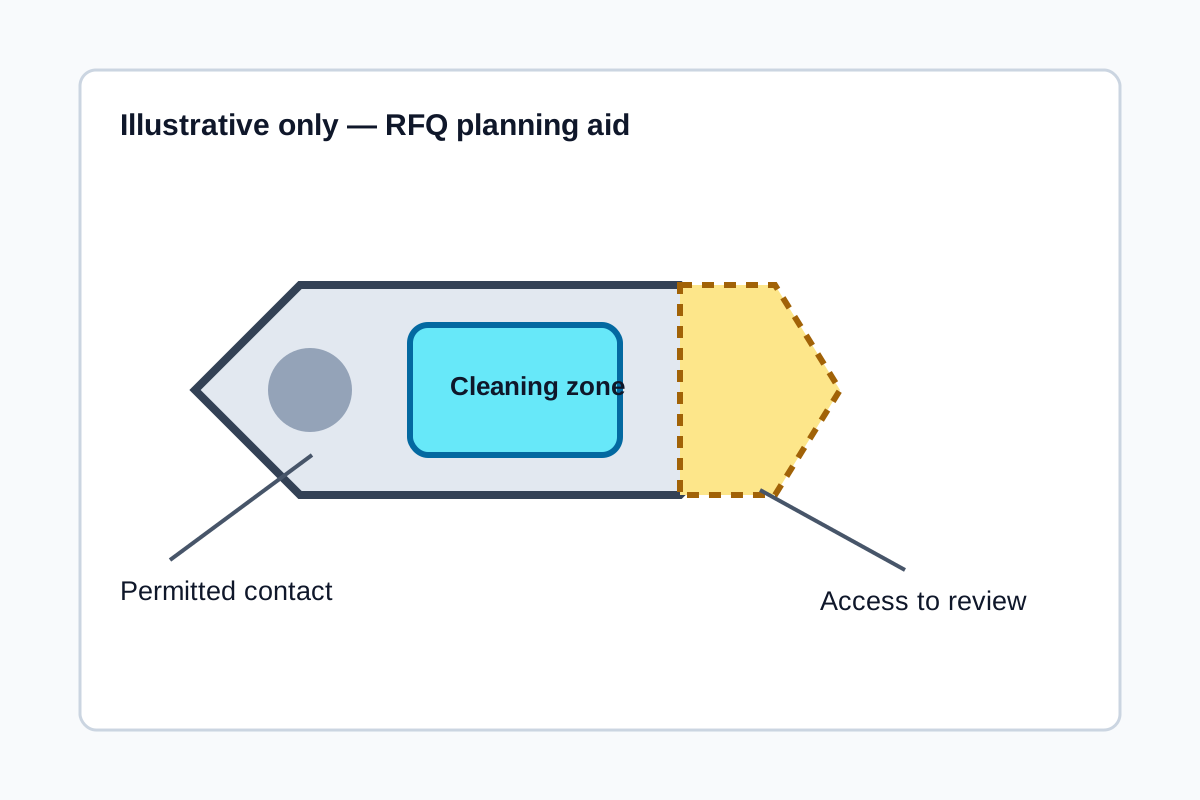
Prepare one annotated view showing three things: the intended cleaning zone, the areas where fixture contact is permitted, and the areas whose access remains unresolved. Where a contact area and cleaning zone overlap, flag the conflict for review. This gives the supplier a concrete question to answer instead of an unqualified instruction to “clean the whole part.”
Ask for the access review to use the proposed seated and clamped condition. Include the clamp in its working position, the supports and any other fixture features near the cleaning zone. For a recess, flange underside or second face, ask which approach and orientation are proposed and whether repositioning is needed. Leave required working distance and allowable approach conditions to the selected system and application review.
As a vendor-specific example, Laserax describes a robot cleaning configuration in which the arm moves the laser head and adjusts its angle. That illustrates why approach direction belongs in the discussion. It does not demonstrate that every surface on your part is accessible, or that another supplier offers the same configuration. Request a zone-by-zone explanation for your proposed setup and keep unproven access questions visible in the RFQ.
Evidence: Laserax: robot laser cleaning configuration. A manufacturer example of head movement and angle adjustment, not a LaserLuma equipment specification.
Check loading and removal as separate movements
Describe how the part arrives, how it is placed on its references and how it leaves the fixture. A top-view cleaning-zone sketch does not answer those handling questions. Ask the supplier to review the loading approach, the space available with clamps open, and the intended removal movement alongside the cleaning position.
Include orientation in the description. State which face arrives upward, whether the part can arrive reversed, and whether similar variants could be confused. Ask what physical feature or checking step is proposed to identify the correct part and orientation. Record this as a design question; a label, pin or sensor should not be described as preventing every loading error without a defined and verified arrangement.
If manual handling and automatic loading are both being considered, describe each route separately. Identify the proposed contact or gripping areas and ask which fixture inputs would change. The useful RFQ output is a clear handling assumption for each option, with unresolved access questions assigned to someone who can answer them.
Make the changeover requirements explicit
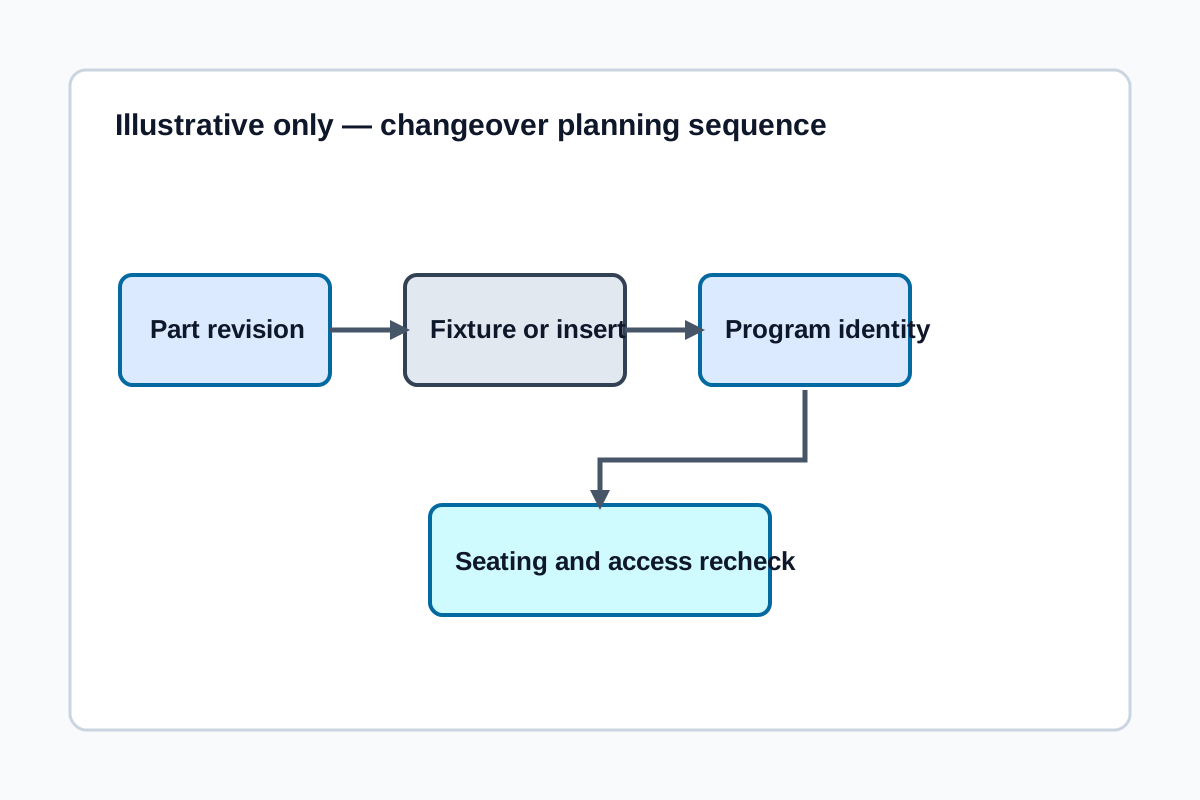
For each part variant, list what is expected to change: the part revision, fixture or insert, locator setting, clamp position, loading orientation and cleaning program identity. Mark items that are shared, items that change and items that remain unknown. This is more useful than asking for a “flexible fixture” without defining the variation it must support.
Ask who performs the changeover and how the intended part, fixture and program combination will be checked. Also define what the team needs to recheck before returning to production. In this fixture discussion, keep that review focused on seating, permitted contact and access to the specified cleaning zones. Any cleaning-result acceptance criteria remain a separate application requirement.
Return to the illustrative bracket family: if a different insert is proposed for the second variant, ask which drawing identifies that insert and how its seating and access will be reviewed with that variant. The answer should become a traceable requirement or an assigned trial question, not an assumption that swapping an insert preserves every previous result.
Build an RFQ package with open questions assigned
Use the table below as a handoff checklist. For each row, attach the information you already have and mark the remaining question as requiring a trial or an engineering decision. Name the person or team expected to answer it. You do not need to invent a tolerance or select a clamp just to fill an empty field.
| RFQ item | Information to attach | Question to resolve |
|---|---|---|
| Part family | Drawing revisions and variant list | Which differences affect the fixture? |
| Positioning references | Marked reference features and known variation | How is correct seating established and checked? |
| Clamping and support | Permitted contact areas and restrictions | Where is restraint applied and supported? |
| Cleaning-zone access | Annotated cleaning and access-review zones | Which zones can be addressed in the proposed clamped position? |
| Loading and removal | Incoming orientation and handling approach | What clearance or orientation questions remain? |
| Changeover | Shared and changing fixture/program items | Who changes and verifies each item? |
| Evidence still needed | Available parts, drawings and proposed demonstrations | Which questions require representative parts or a trial? |
| Responsibility | An owner and next action for each open item | Who will close the question before the design is agreed? |
Treat the marked drawing and this table as working documents. When the supplier proposes a fixture concept, compare it with the same zones, references and variant list. Record changed assumptions explicitly so that both sides are discussing the same part presentation.
Take the part-presentation package into the cell discussion
Prepare the drawings, zone map, handling description and changeover list for the automated-cell enquiry. Include the open questions as well as the information already agreed. LaserLuma's automated-cleaning page provides the next step for discussing cell requirements; the fixture arrangement and cleaning process still need application-specific review.
Review automated laser cleaning cell requirements