Oil and grease removal
Can Laser Cleaning Remove Oil and Grease? Know When Solvent Cleaning Is Still Required
Evaluate laser cleaning for oil and grease by contaminant identity, deposit thickness, substrate, plume control and downstream acceptance.
12 min readBy LaserLuma technical team
Published
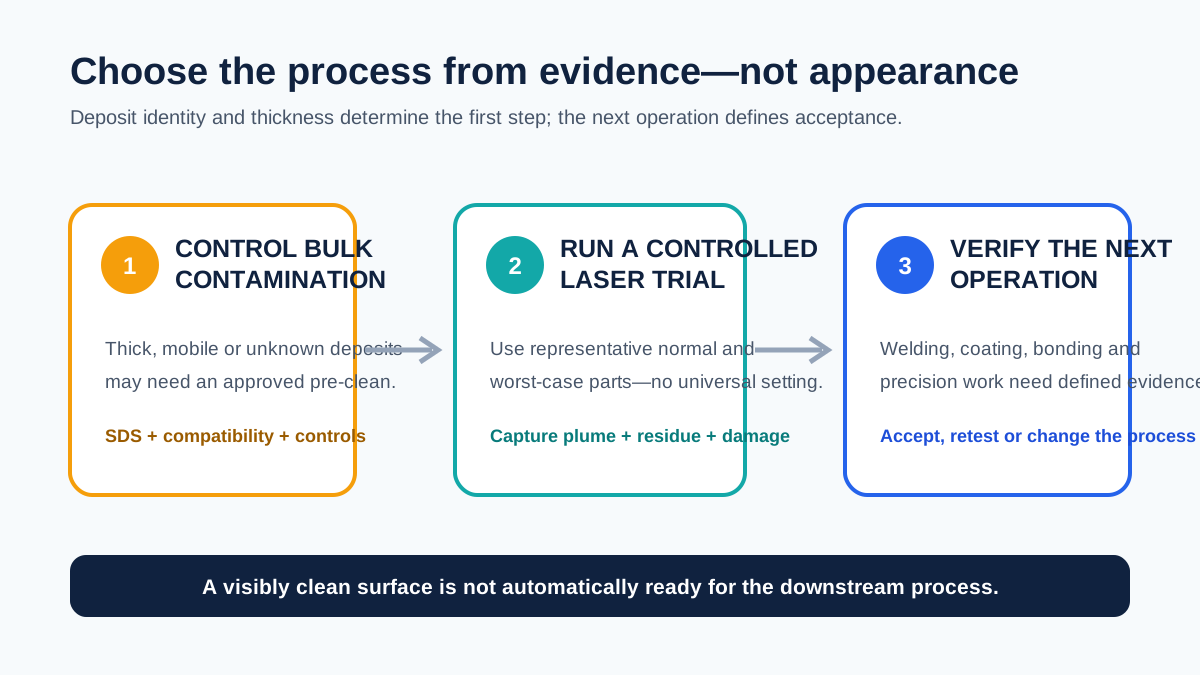
Laser cleaning can remove some oil and lubricant films from some metal surfaces, but it does not make solvent or other pre-cleaning universally unnecessary. The result depends on contaminant chemistry and thickness, substrate or coating, wavelength and pulse regime, geometry, plume control and the downstream cleanliness requirement. Thick grease, oil sludge, inaccessible features or a strict residue limit may require bulk removal, solvent cleaning or a combined process before a laser trial.
First identify what is actually on the surface
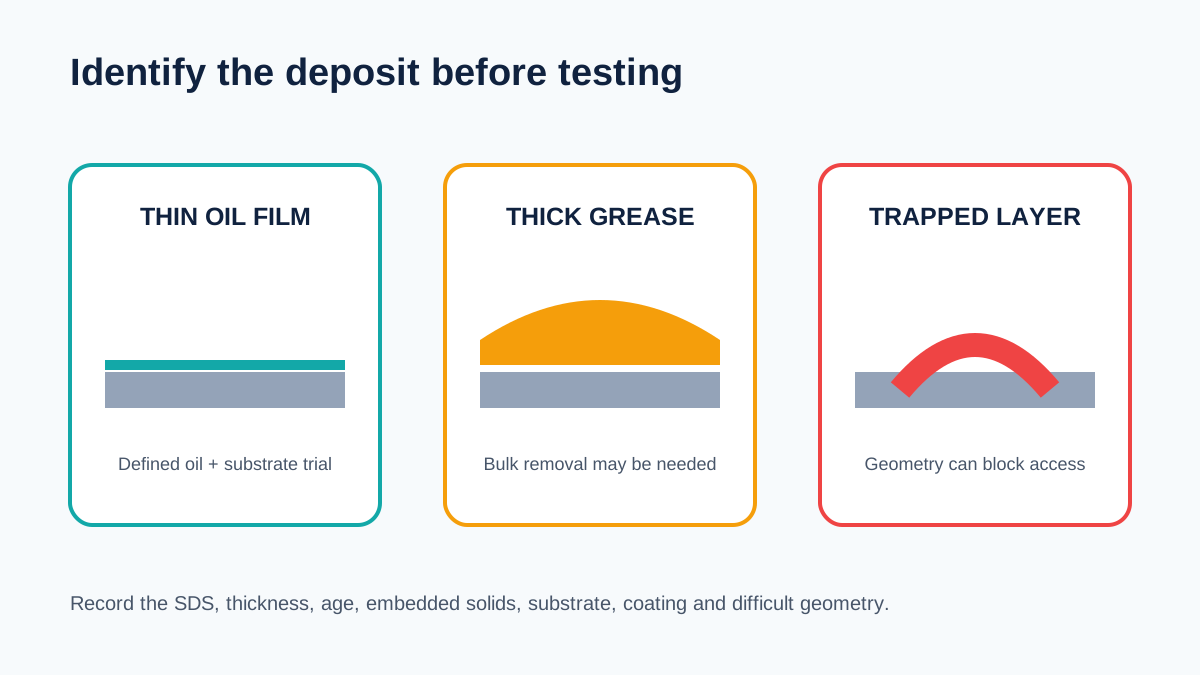
‘Oil’ can mean a thin mineral-oil film, machining fluid, drawing lubricant, hydraulic oil, silicone residue or degraded carbonaceous film. ‘Grease’ can include thickeners, additives, dirt and metal particles. Those systems absorb light, vaporize and leave residue differently.
Record the product and SDS when available, film thickness and distribution, age, temperature history, embedded solids, substrate alloy, coating and surface texture. Photograph edges, threads, pits and overlaps where contamination can collect. Do not use a clean flat coupon to represent a complex production part without documenting the difference.
What published evidence proves—and does not prove
A peer-reviewed 2012 study tested specific mineral and commercial lubricants on carbon steel, stainless steel and copper with defined near-infrared and ultraviolet pulsed lasers. It found that removal mechanisms depended critically on optical properties. This supports feasibility for defined oil, metal and laser combinations; it does not prove that every grease, coating, geometry or downstream process can be cleaned to acceptance without solvent.
A separate remanufacturing study reported poor removal when oil sludge was too thick, with solid constituents potentially remaining. That supports a practical boundary: remove bulk deposits before expecting a controlled laser surface-cleaning trial.
Evidence: Laser removal of lubricating oils from metal surfaces · Remanufacturing study — thick oil-sludge limitation
When solvent or bulk pre-cleaning remains sensible
Pre-clean or use a combined process when the deposit can smear, drain or ignite; is too thick for controlled ablation; contains unknown additives; blocks optical access; or creates excessive plume and debris. Also consider it when the acceptance method requires a chemistry or residue limit that the laser trial has not yet demonstrated.
Solvent selection and use require the SDS, compatibility, ventilation, fire controls, waste handling and applicable workplace rules. OSHA ventilation requirements for solvent-cleaning operations illustrate why ‘use solvent first’ is not a casual universal instruction. Follow the exact facility process and local requirements.
Evidence: OSHA — Ventilation for solvent-cleaning operations
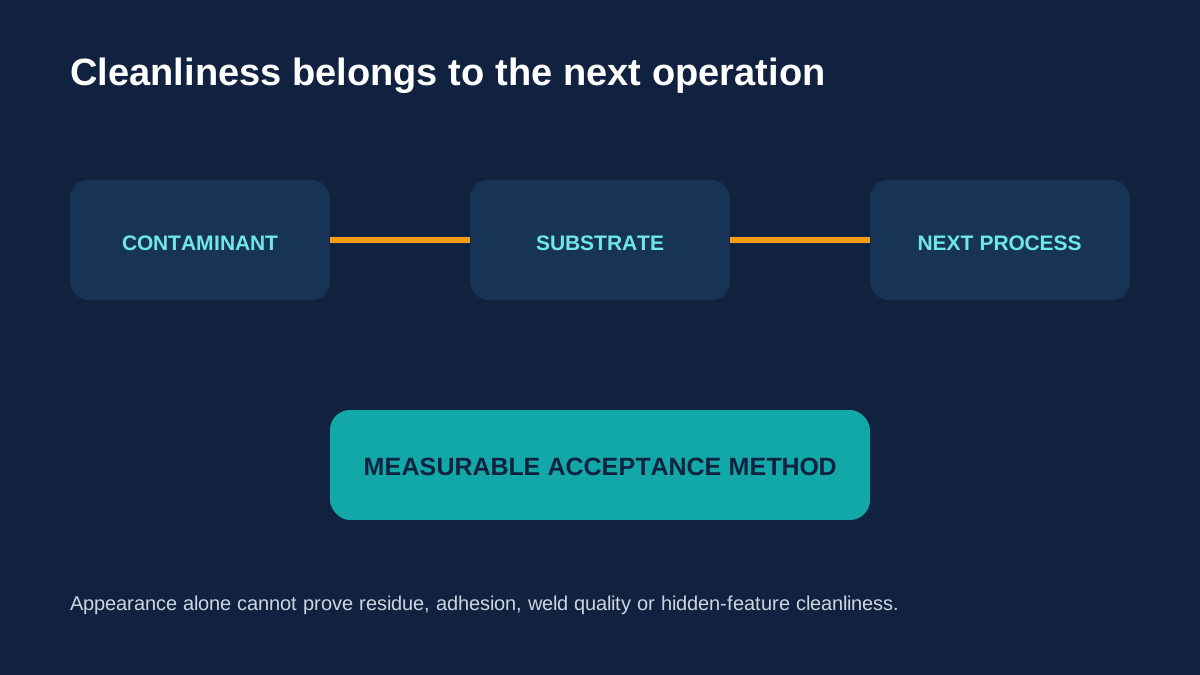
Define cleanliness by the next operation
A visibly clean surface is not automatically ready for welding, coating, bonding, sealing or vacuum service. Choose an acceptance method that matches the downstream risk.
Laser processing can also change roughness, oxide condition or surface chemistry. The trial must compare the cleaned part with an approved reference and check substrate or coating damage.
| Downstream need | Evidence to define before trial | What appearance cannot prove |
|---|---|---|
| Welding | Defect criteria, joint zone and process stability | Absence of interfering residue |
| Coating | Adhesion test, surface condition and residue limit | Coating durability |
| Adhesive bonding | Approved preparation method and bond test | Bond strength or life |
| Precision assembly | Chemistry or particle limit and sampling | Hidden-feature cleanliness |
Control plume, fire and secondary contamination
Laser interaction can produce vapor, aerosols, particles and decomposition products from the contaminant and underlying surface. Identify the material and SDS, evaluate emissions, use suitable local extraction and filtration, and keep the work area inside the equipment supplier’s safety controls. Do not describe laser cleaning as fume-free, chemical-free or fire-risk-free.
Keep flammable liquids and uncontrolled deposits out of the beam area. If solvent pre-cleaning is used, ensure the part and work zone satisfy the approved drying and clearance procedure before laser work. Laser class controls, enclosure, eyewear and interlocks remain configuration- and jurisdiction-specific.
Run a staged sample trial
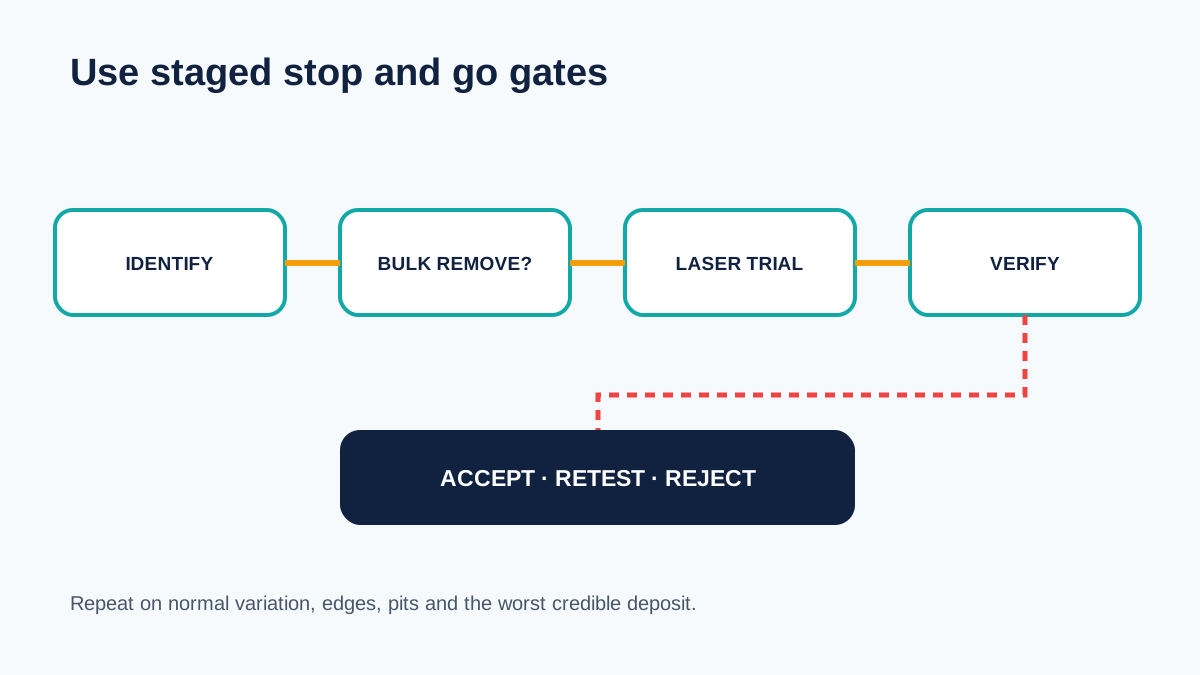
Characterize the contaminant, thickness, substrate or coating, geometry and acceptance method. Remove bulk deposits with an approved method when grease or sludge is thick or mobile. The equipment supplier then defines a safe trial window from the material evidence; this guide supplies no universal settings.
Capture plume, redeposition, discoloration, smearing and access limits. Verify with the agreed surface, chemistry, adhesion, weld or other downstream test, then repeat on normal variation, edges, pits and the worst credible contamination.
Prepare a useful sample-testing request
Send part photos, material or alloy, coating, contaminant identity and SDS, thickness range, work area, geometry, current cleaning method, production rate and downstream acceptance. State whether solvent use is prohibited, merely undesirable or allowed as controlled pre-cleaning; those are different design constraints.
Review laser cleaning machine families only after the process boundary is clear, then request sample testing with representative clean, normally contaminated and worst-case parts.
Request sample testingFAQs
Can laser cleaning remove a thin oil film from steel?
It can for some defined oil, steel and laser conditions, as published studies demonstrate. A sample trial must still verify residue, substrate effect and downstream acceptance.
Can laser cleaning remove thick grease?
Thick grease or oil sludge may clean poorly or create excessive plume and redeposition. Bulk removal or controlled pre-cleaning may be needed before the laser step.
Does laser cleaning eliminate solvents?
Not universally. Some workflows may reduce or avoid solvent, while others need solvent or another pre-clean because of deposit thickness, geometry or residue requirements.
Is a visibly clean surface ready for welding or coating?
Not necessarily. Use the downstream process’s approved acceptance method, such as a weld-quality, adhesion, chemistry or residue test.
Can one laser setting work for every oil and metal?
No. Contaminant optical properties, thickness, substrate, coating, wavelength, pulse behavior and geometry change the process window.
What should be sent for a laser-cleaning trial?
Provide representative parts, contaminant identity and SDS, material or coating, thickness range, geometry, current method, production need and downstream acceptance criteria.