Surface preparation
Flash Rust After Laser Cleaning: Define the Hold and Recoat Window
Decide when laser-cleaned steel can be coated, held or reinspected. Check coating requirements, temporary protection compatibility and the actual hold conditions.
8 min readBy LaserLuma technical team
Published
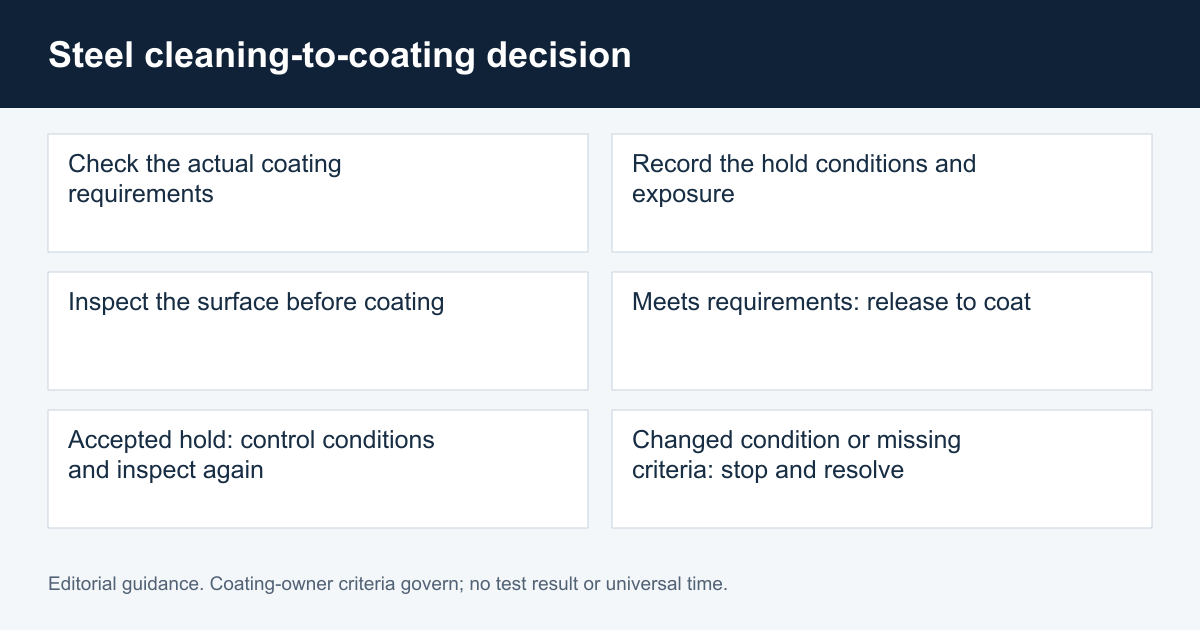
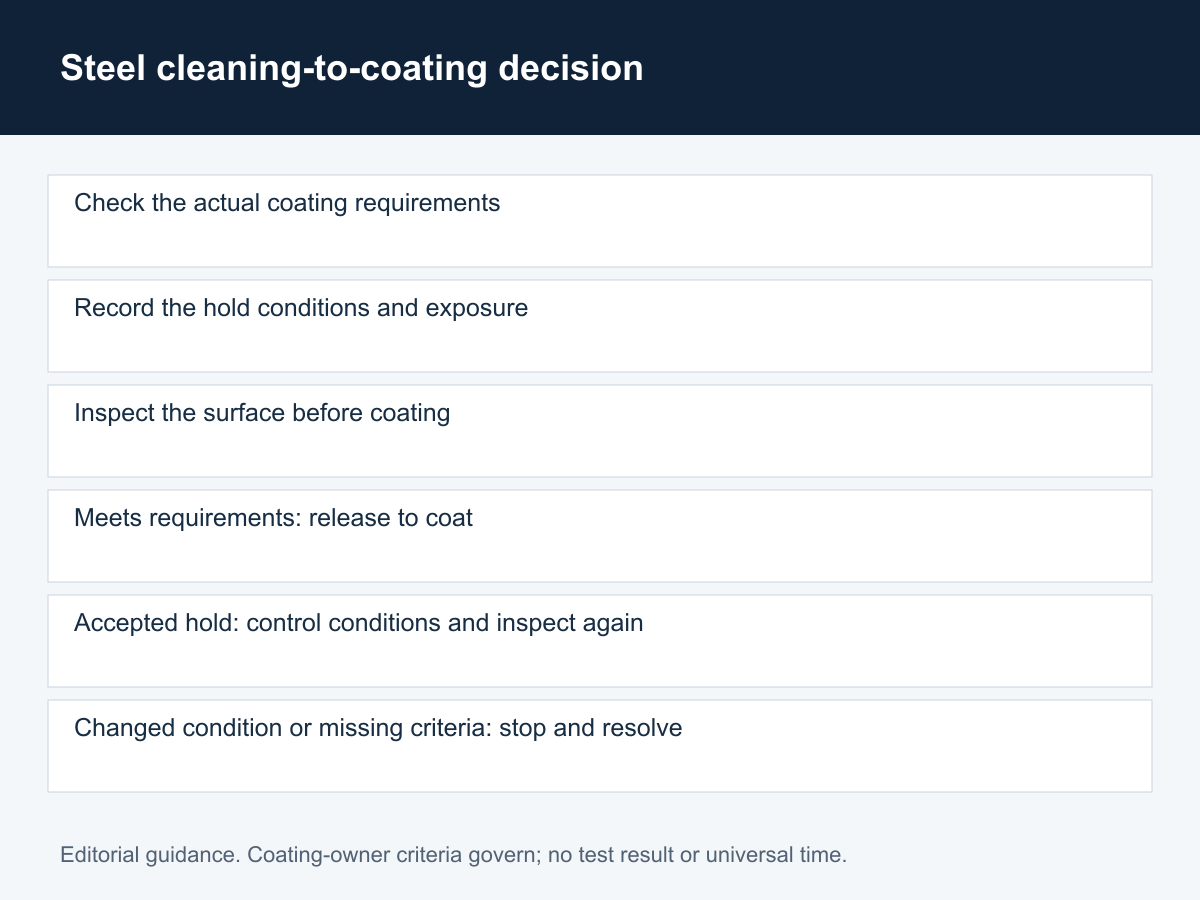
Define the waiting window for laser-cleaned steel from the selected coating requirements, the actual storage conditions and the surface condition immediately before painting. A clean-looking part at the end of a laser pass does not establish how long it can wait or whether it is ready for the specified primer. If the hold conditions change, the surface changes or the temporary protection is unapproved, stop and have the coating owner decide whether inspection or further preparation is needed.
Start with the coating requirement, not a fixed number of hours
A production schedule needs a cleaning-to-coating window, but a universal number of safe hours would hide the conditions that decide acceptance. Identify the primer and full coating system first. Ask the coating owner to specify the required cleanliness, surface profile, contamination limits and environmental conditions, together with what must be checked again after a delay. A visually clean surface does not by itself demonstrate all of those requirements.
Hempel's surface preparation guidance states: “The allowed level of flash rust depends on the succeeding paint”. Its preparation guidance concerns abrasive and wet methods. It provides a useful acceptance boundary, but it does not establish that laser cleaning achieves a specified preparation grade or a coating-compatible hold window.
Evidence: Hempel's surface preparation guidance
Also separate two different clocks. The bare-steel hold runs from cleaning completion to the first coating. A primer's overcoating interval runs between coating layers. Do not borrow an existing coating's maximum overcoating interval and treat it as permission to leave bare steel exposed for the same time.
For work that begins with an old coating, establish the paint-removal endpoint before recoating first. This article addresses what happens after the steel has been cleaned: whether it may wait, how that wait is controlled and who releases it to coat.
paint-removal endpoint before recoatingRecord the exposure that the clock cannot describe
Record where the steel waits and what happens to it. Include the cleaning completion time, intended coating time, storage location, handling and any wetting or condensation event. Where the coating requirements call for environmental checks, record air and substrate temperature, relative humidity and dew point near the work rather than relying only on a room reading taken elsewhere.
Jotun's Barrier 80 S application guide checks conditions near the substrate for dew formation and prohibits applying that product to a wet surface or one likely to become wet. These are requirements for one coating system, not universal storage limits for laser-cleaned steel. Use the current documents for the actual project coating; a dry appearance alone should not replace its required checks.
Evidence: Jotun's Barrier 80 S application guide
A proposed hold condition should describe both the time and the environment. Moving a part to a different area, changing its protection or introducing handling contamination means the original record may no longer represent the surface being coated. Treat such changes as points to review the hold decision, rather than simply restarting a timer.
Choose the next action from the condition of the surface
Use the following table as a project discussion tool. The coating owner defines the actual acceptance criteria and corrective preparation; the table does not qualify a laser process or authorize a protective product.
| Situation before coating | Next decision | Evidence to keep |
|---|---|---|
| The surface meets the specified preparation and application requirements | Release it to coat under the project's inspection process | Current inspection and environmental records |
| Coating must wait, and the proposed storage or protection has been accepted for the coating system | Hold within the agreed conditions, then inspect again before application | Hold conditions, exposure history and protection instructions |
| Wetting, contamination or a visible surface change has occurred | Stop release and assess the actual condition against the coating requirements | Baseline and current observations, plus the intervening history |
| The allowed hold conditions or protective-product compatibility are unknown | Resolve the missing criteria before coating | Coating-owner decision and the required verification |
| Inspection identifies a condition outside the coating's acceptance criteria | Use the corrective preparation selected for that system, then verify it | Disposition, preparation record and fresh inspection |
Check temporary protection before applying it
A rust preventive is an additional process step, not an automatic bridge to painting. Before using an oil, inhibitor, VCI treatment or temporary primer, obtain a decision for the actual product and the intended coating system. Establish whether it may remain, whether it must be removed and how the surface will be checked after cleanup.
Hempel's wet-method guidance places conditions on inhibitor residues and acknowledges limits to its advice on third-party inhibitors. Jotun's guide also makes shop-primer suitability dependent on system compatibility and the condition of the primer before overcoating. Neither source approves a generic protective treatment for laser-cleaned steel.
Keep the product identification, application instructions, compatibility decision and any required removal procedure with the part's hold record. Do not assume a treatment recommended for stored tools, washed parts or a different primer can be painted over in this project. If compatibility is still unknown, it remains an unresolved release condition.
Reinspect at coating time, not only at cleaning completion
The end-of-cleaning inspection provides a baseline. It cannot establish the later condition after storage and handling. Hempel's wet surface preparation guidance separates inspection of the attained cleanliness from assessment of flash rust shortly before painting. Apply that timing logic to the project inspection plan, while keeping its wet-method grades and test procedures separate from laser preparation.
Evidence: Hempel's wet surface preparation guidance
If rust or discoloration appears, record what changed and ask the coating owner to assess it. A photograph alone cannot identify the cause, establish an allowed rust grade or prove coating adhesion. Check the condition against the specified requirements rather than deciding that every color change is acceptable—or that every change requires another laser pass.
Where further preparation is required, its method and endpoint must fit the coating system. Repeating the laser treatment is not, by itself, proof that the surface has been restored to an acceptable condition. Verify the result before release to coat.
Use a hold record to define the project's window
If the project does not yet have a demonstrated hold window, discuss a representative immediate-versus-delayed comparison with the coating owner. Document the starting condition, cleaning process, proposed delay, storage and protection. Agree in advance which preparation checks and coating evaluations will determine acceptance. This is a proposed verification approach, not a standardized procedure or a claim that a trial has already passed.
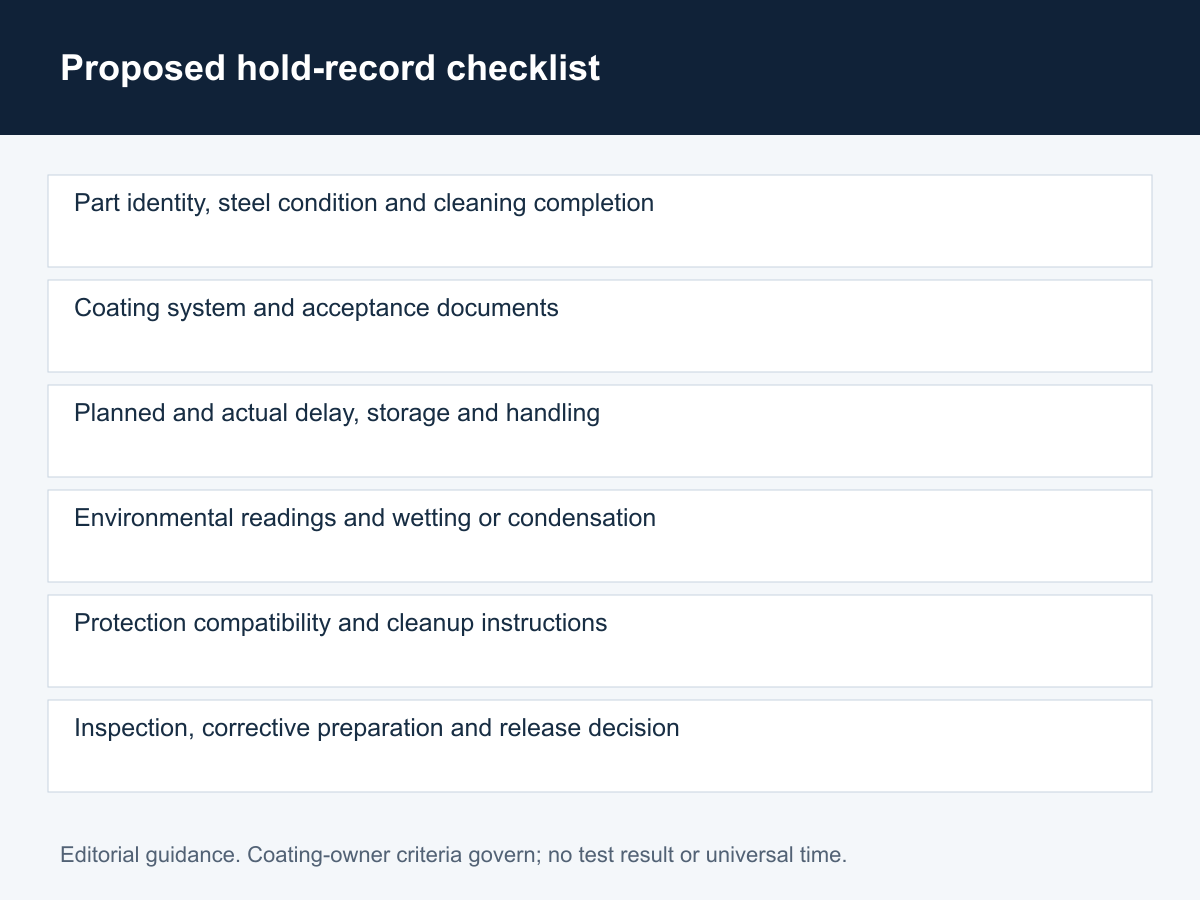
A useful record can include:
Part identity, steel condition and cleaning completion time.
Intended coating system and the documents defining acceptance.
Planned and actual delay, storage location and handling history.
Relevant environmental readings and wetting or condensation events.
Protective product, compatibility decision and cleanup instructions.
Baseline and coating-time inspection results, any corrective preparation and the release decision.
Bring these inputs to a sample-testing discussion. The useful question is whether the proposed preparation and delay can be evaluated against the chosen coating requirements. A successful result for one recorded condition should not be presented as a universal time allowance for other steel, protection or storage conditions.
sample-testing discussionPlan the steel cleaning-to-coating handoff
For a steel-structure laser-cleaning application review, prepare the steel condition, intended coating system, cleaning-to-coating schedule, storage conditions and proposed protection. Include the inspection criteria and any existing hold-trial records. These inputs make the hold and reinspection decisions concrete without promising a fixed waiting time or coating result.
steel-structure laser-cleaning application reviewFAQs
How long can laser-cleaned steel wait before coating?
There is no universal safe waiting time established by the sources used here. Define the window from the actual coating requirements and the hold conditions the project has accepted or demonstrated. Reinspect the surface before application, and review the decision if the recorded exposure or surface condition changes.
Can I coat directly over a temporary rust preventive?
Only when the actual protective product and intended coating system have been accepted for that sequence. Confirm whether the protection may remain, what cleanup is required and how the surface will be checked. Generic oil, VCI or inhibitor advice does not establish that the steel is ready to paint.
What should I do if rust returns before coating?
Stop release, record the change and assess the surface against the coating's acceptance criteria. The coating owner decides whether it is acceptable or needs corrective preparation. Verify the resulting condition rather than assuming that another laser pass will restore coating readiness.