Process safety
Laser Cleaning Safety & Fume Extraction: Beam, Plume and Acceptance Checklist
Plan laser cleaning safety and fume extraction around beam control, reflections, plume capture, filters, fire risk, training and verified maintenance.
12 min readBy LaserLuma technical team
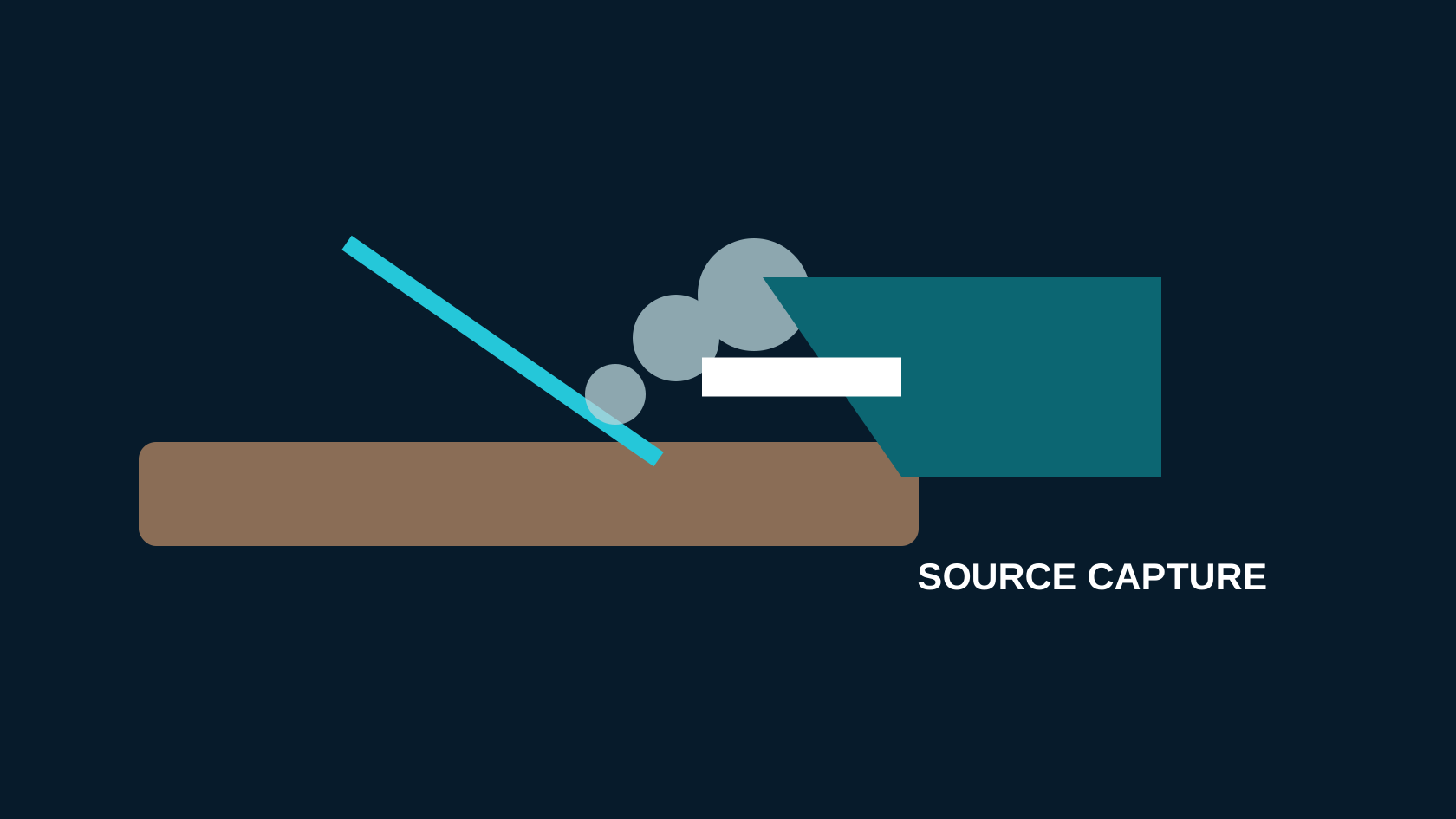
Reviewed August 13, 2026. Laser cleaning safety requires more than laser eyewear and a portable extractor. The operation must control direct and reflected laser radiation, the airborne plume, fire and hot-particle risks, electrical and mechanical hazards, access, training and waste. Fume extraction should capture the plume close to its source, use a filter train selected from the contaminant assessment, discharge safely, and be inspected and measured as part of the process.
Begin with a material and task hazard review
Identify the base material, every removable layer, previous treatments and unknown contamination before choosing controls. Rust, paint, oil, plating, adhesive and process residue can produce different particles or gases when heated. Legacy coatings may contain hazardous metals or other substances that require specialist assessment.
Map the beam path, specular and diffuse reflection opportunities, working distance, nearby people, combustible material, enclosure, robot or handheld motion, electrical supply and how the part enters and leaves the work area. The result should be a documented risk assessment led by competent laser-safety and occupational-hygiene professionals.
- Obtain safety data and coating history where available.
- Treat unknown layers as unknown hazards until assessed.
- Define normal operation, setup, focus checks, maintenance and foreseeable fault conditions.
- Keep the process recipe, enclosure and extraction configuration under change control.
Use the hierarchy of controls
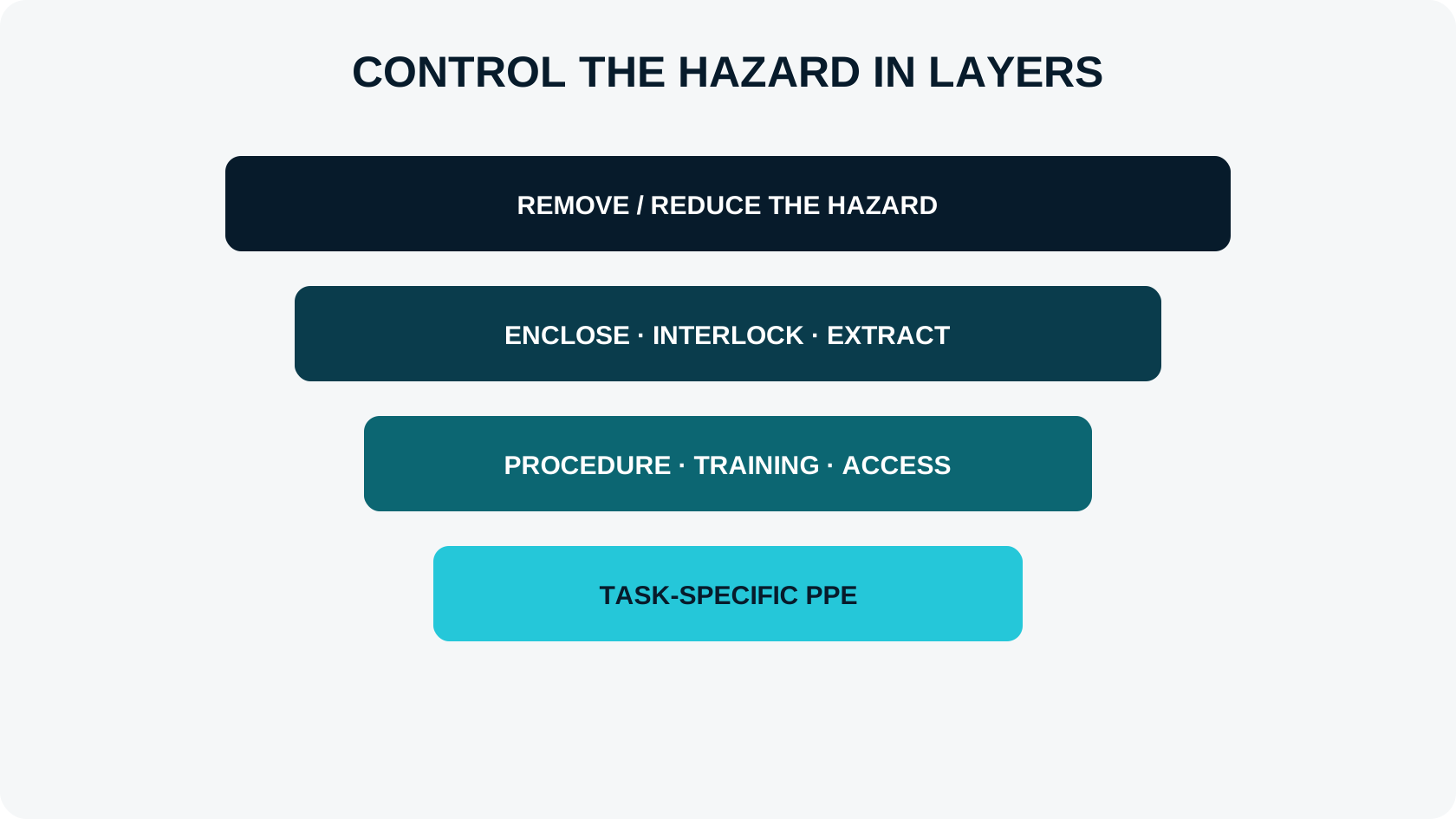
NIOSH's hierarchy of controls prioritizes elimination or substitution, then engineering controls, administrative controls and personal protective equipment. For laser cleaning, engineering may include a light-tight enclosure, interlocks, guarded beam path, keyed control, emergency stop, restricted access and local exhaust ventilation.
PPE is the last layer, not the system. Laser eye protection must match the actual wavelength and required protection level and must not replace enclosure or beam control. Respiratory, skin, hearing and other protection depend on the exposure assessment and applicable rules.
Evidence: NIOSH hierarchy of controls · OSHA laser hazards overview
Control the direct beam and every credible reflection
Industrial cleaning lasers are capable of hazardous eye and skin exposure. The surface can change from rusted and diffuse to clean and more reflective during the pass. Curved, polished, wet or angled features can redirect energy outside the expected path.
A controlled area should define boundaries, access, signs, authorized personnel, beam termination, setup method and emergency response. Handheld work needs a stable stance, managed cable and head, defined no-fire direction and a way to stop immediately. Automation needs guarding, interlocks and fault-safe motion appropriate to the full cell.
Capture the plume at source
Place the capture inlet close enough and in the correct direction to intercept the rising or projected plume before it crosses the operator's breathing zone. The useful position changes with scan direction, part geometry, gravity, cross-drafts and robot motion. A hose somewhere in the room is not proof of capture.
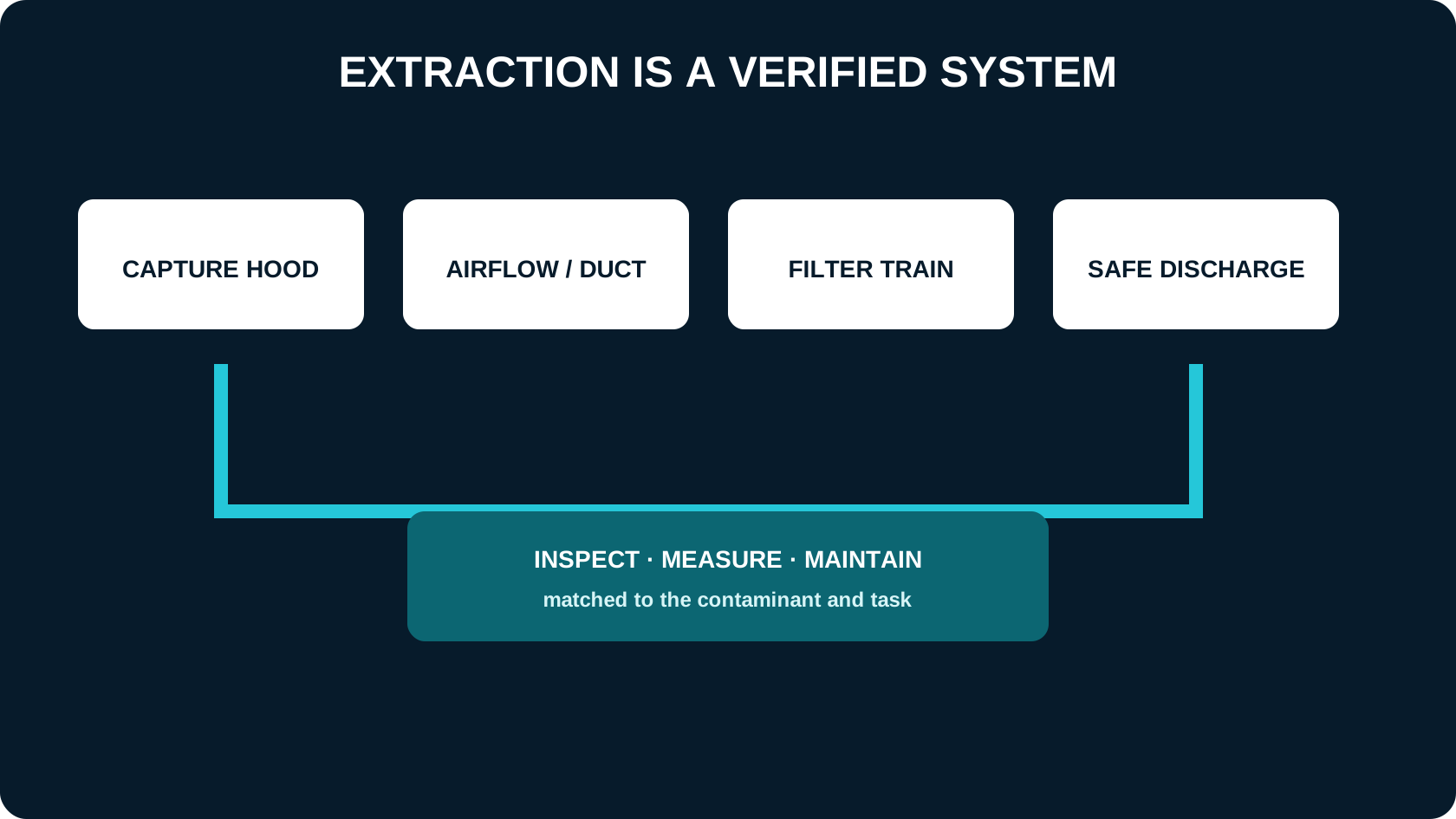
Design the hood, airflow, duct, fan, filter and discharge as one system. Too little airflow loses capture; poorly shaped high airflow can disturb the process or spread contamination. Flexible ducts add resistance, bends and damage risk. Commission the actual configuration and retain measurable acceptance criteria.
Select filters from the contaminant assessment
Particle filtration and gas or vapour control are different functions. A particulate filter does not automatically control gaseous products; an adsorbent stage has finite capacity and must be selected and changed for the relevant compounds. Sparks or hot particles may also require suitable pre-separation and fire controls.
Ask the extraction supplier to document target contaminants, airflow, pressure drop, filter stages, change-out criteria, safe handling and disposal, fire provisions and discharge arrangement. Do not recirculate air merely because the unit has a filter; the exposure assessment and local rules determine whether recirculation is acceptable.
Verify exposure, maintenance and operator competence
Commissioning should include observation or visualization of capture, airflow or pressure checks at defined points, and occupational exposure assessment where required. Recheck when material, coating, recipe, head, hood, duct, filter, enclosure or cycle time changes.
Daily checks can cover hood position, visible damage, airflow indication, alarms, filter status, enclosure and interlocks. Planned maintenance should define inspection, filter change, duct cleaning, waste handling and records. Operators need task-specific training; maintenance staff need controls for stored energy, unexpected laser emission and contaminated components.
Plan a controlled sample testWhat to send for a safety-led process review
Provide the material and coating history, photos/video, part geometry, work area, desired result, production volume, existing enclosure/ventilation and site restrictions. State whether cleaning is handheld, fixed, robot-guided or still undecided.
LaserLuma can use these inputs to plan a representative process trial and equipment discussion. Final guarding, extraction, exposure control, regulatory compliance and operating approval remain site-specific responsibilities for the buyer and qualified safety professionals.
FAQs
Does laser cleaning create fumes?
It creates an airborne plume whose composition depends on the removed layer, base material and process. Assess the real contaminant and capture it at source.
Is a portable fume extractor always sufficient?
No. Capacity, hood position, airflow, filter selection, fire provisions and discharge must fit the task and be verified.
Can laser safety glasses replace an enclosure?
No. PPE is a final control layer. Beam enclosure, interlocks, access control and other engineering measures should be prioritized.
How close should the extraction hood be?
Close enough and oriented to capture the actual plume without disrupting work; verify the position under real scan direction, geometry and cross-drafts.
When should controls be reassessed?
Whenever material, coating, recipe, laser, head, hood, duct, filter, enclosure or production cycle changes, and at scheduled review intervals.