Process selection
Pulsed vs Continuous Laser Cleaning: Which Process Should You Test First?
Compare pulsed vs continuous laser cleaning by layer, heat input, area, access, workflow and safety, then choose the first representative test.
10 min readBy LaserLuma technical team
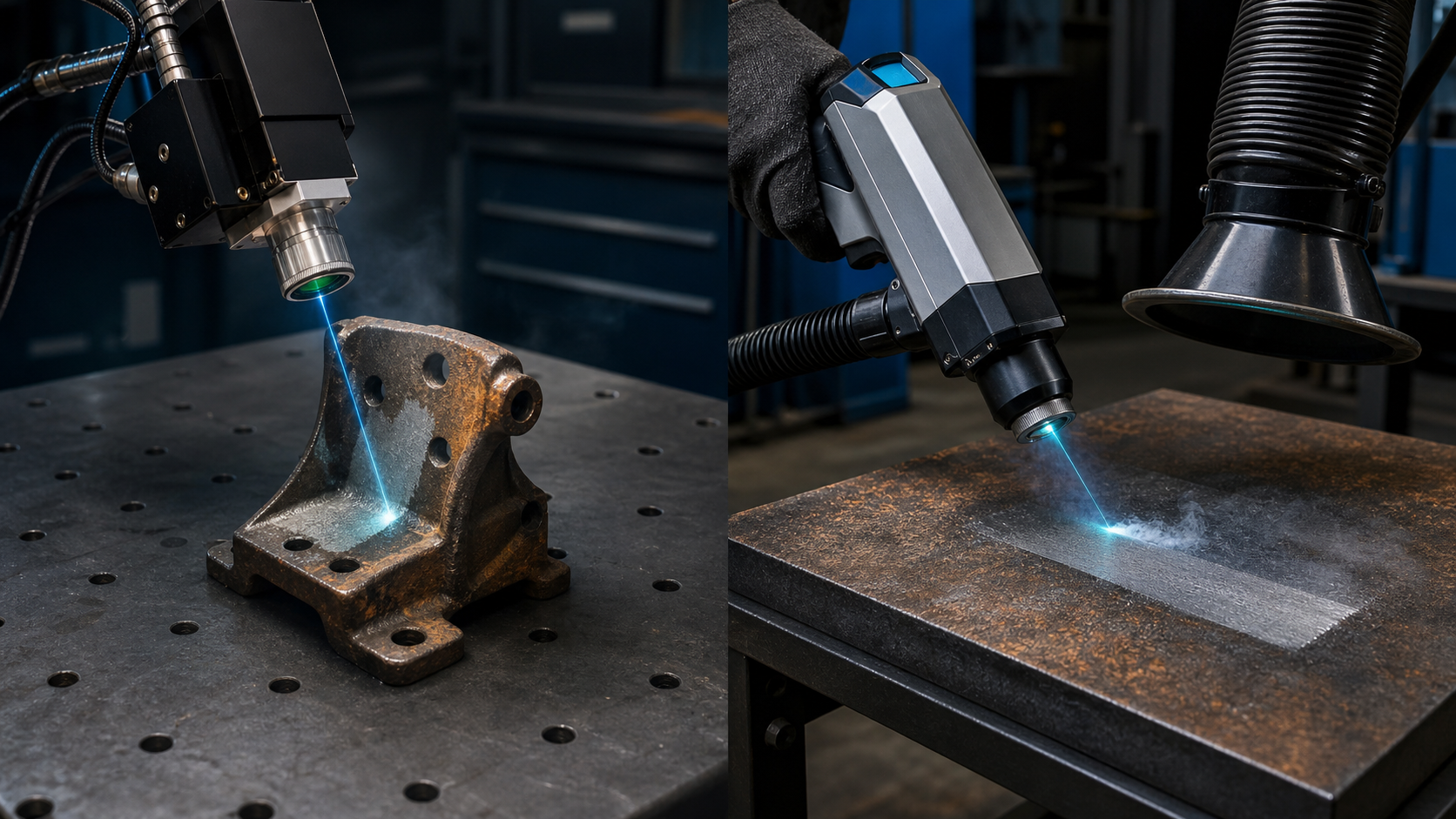
Pulsed and continuous laser cleaning are different process starting points, not universal rankings. Pulsed delivery can be a useful first test for localized, detailed or heat-sensitive work; continuous-wave (CW) delivery can be a useful first test for larger, robust areas where sustained energy and throughput matter. The right choice depends on the layer, base material, geometry, acceptance criteria, extraction and complete workflow.
Start with the layer, substrate and next process
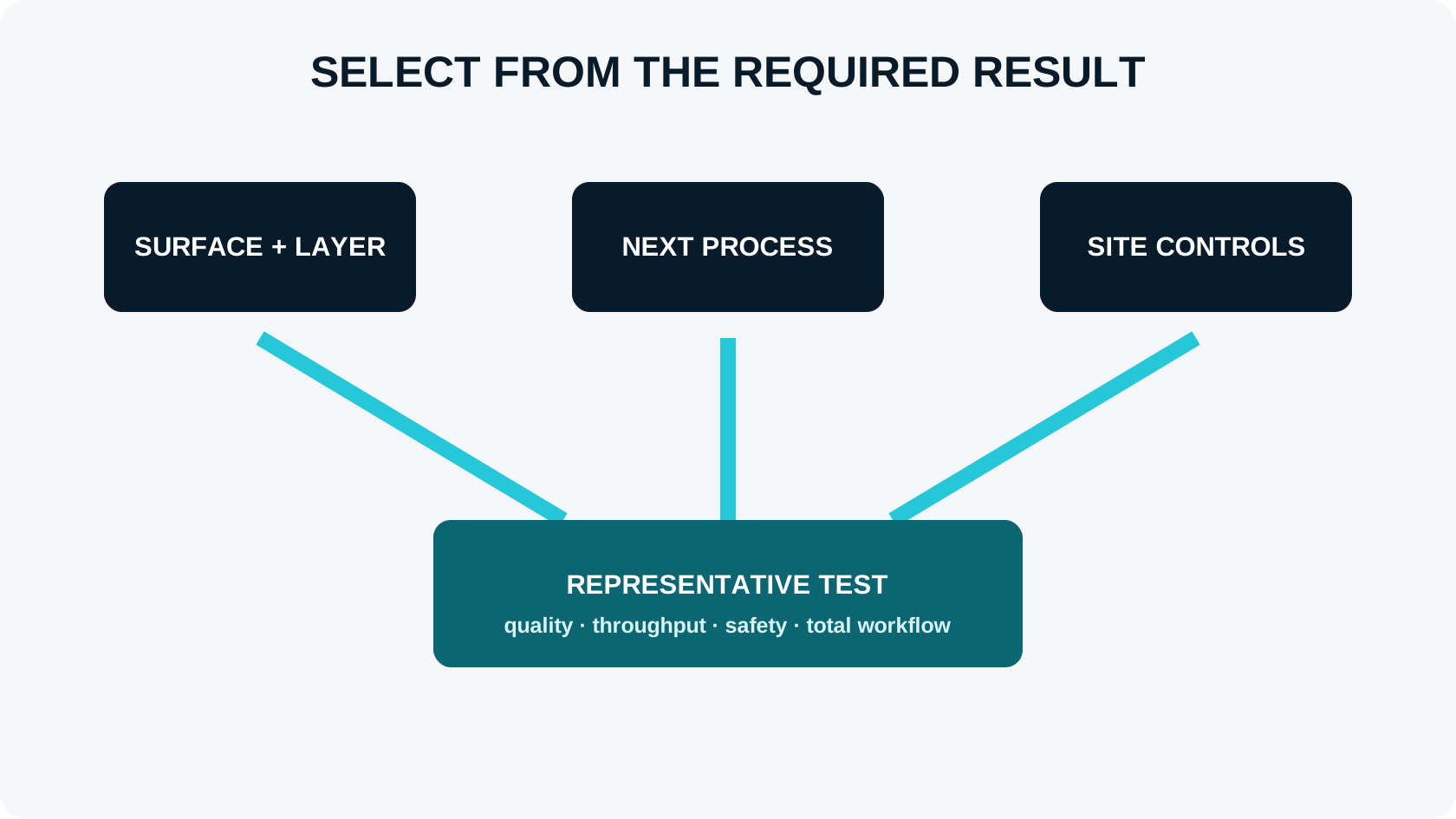
Record the base material, thickness, rust or coating condition, oils or residue, edges, cavities and the area per shift. Then state what happens next: painting, welding, bonding, inspection or maintenance. The next process defines what counts as an acceptable surface.
Do not infer suitability from the word pulsed or continuous alone. Laser-material response changes with wavelength, spot, pulse or power, scan speed, overlap, focus and layer properties. A representative sample is the shortest path to a credible decision.
Pulsed delivery is a sensible first test for localized or delicate work
Pulsed systems deliver energy in separated pulses. In a suitable validated recipe, that can help control heat input and concentrate treatment on a local layer or feature. It is often a practical first hypothesis for detailed mold features, weld zones, localized corrosion, selective coating removal or work where access and collateral heating are critical.
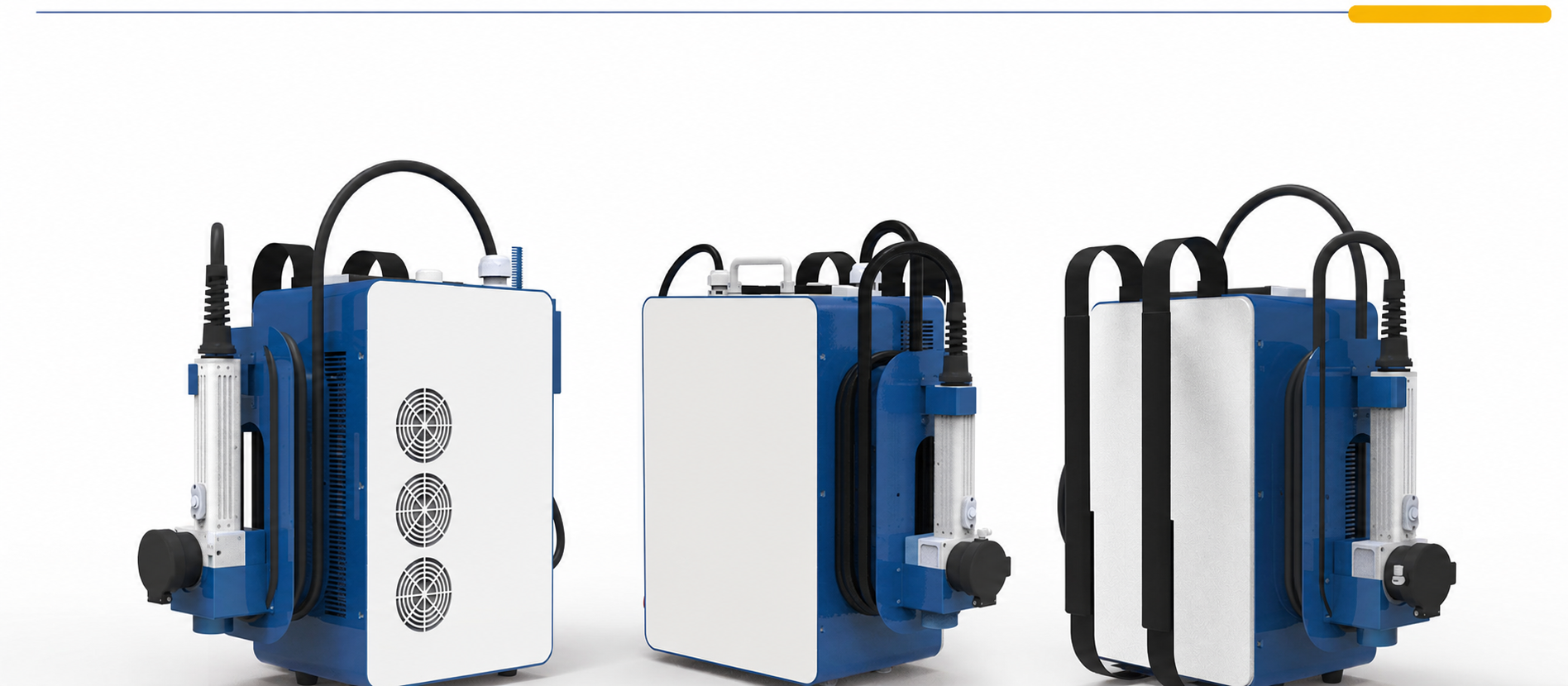
That is a test hypothesis, not a guarantee of no damage. Measure surface response, edges, temperature, roughness or downstream acceptance on the actual part. Portable, top-hat, backpack and other pulsed configurations in the catalogue remain configuration options rather than proof of a universal process window.
Evidence: OSHA laser hazards and control standards
Continuous delivery is a sensible first test for robust, larger-area work
Continuous-wave systems deliver a sustained beam. They can be a useful first test when a robust metal surface, broad accessible area and sustained removal rate are more important than highly localized energy delivery. High-power and air-cooled continuous families in the catalogue need an application review for working distance, cooling, extraction and motion.
A larger area does not automatically make CW faster. Count setup, handling, plume capture, inspection, rework and downstream acceptance. The useful comparison is the full cycle on the same material, not a supplier's best square-metre clip.
Compare the first-test hypotheses side by side
Use the table to plan two fair tests. Keep the incoming condition, target endpoint, measurement method and safety boundary constant. Record settings and limitations instead of turning one successful coupon into a universal claim.
| Decision point | Pulsed first-test hypothesis | Continuous first-test hypothesis |
|---|---|---|
| Localized or detailed zone | Controlled pulse delivery may suit selective work | Sustained energy may need careful access and heat review |
| Large robust area | May require more passes or motion planning | Sustained delivery may be worth testing for throughput |
| Heat-sensitive substrate | Test thermal response and edge condition | Test temperature rise, dwell and cooling |
| Required surface profile | Measure roughness and morphology against the next process | Measure the same endpoints; do not assume equivalence |
| Site controls | Control reflections, plume, fire and pulse-specific exposure | Control reflections, plume, fire and continuous exposure |
| Best proof | Representative part and downstream acceptance | Representative part and downstream acceptance |
Safety controls change with the process, but neither mode is automatically safe
Both modes require controls for direct and reflected laser radiation, access, beam termination, fire, plume and training. Pulse parameters can change exposure assessment; continuous operation can add sustained thermal and fire considerations. OSHA's laser guidance and the site's competent laser-safety professional should govern the controlled area, enclosure, interlocks, eyewear and operating procedure.
Extraction must match the contaminant and process position. Rust, paint, oil, plating and residue can create different airborne hazards. Design the hood, airflow, filter stages, discharge and maintenance as one system and verify capture on the real job.
Evidence: OSHA laser safety guidelines · OSHA laser hazards standards
Choose the first test with a simple decision rule
Test pulsed first when the work is localized, detailed, selective or heat-sensitive, or when a portable configuration could reduce part handling. Test continuous first when the area is broad and robust, sustained energy is plausible, and the site can support the required cooling, extraction and controlled movement.
When the job includes both conditions, plan a split or hybrid workflow. Compare both hypotheses on identical material and the same acceptance boundary.
- Freeze the incoming condition and target endpoint.
- Measure active time and complete elapsed workflow.
- Inspect edges, overlap, pits and protected areas.
- Include extraction, containment, handling and waste.
- Have the downstream process owner sign the result.
Turn the result into a configuration conversation
A useful test record lists material, layer, geometry, machine mode, optics, settings, scan path, passes, working distance, extraction and elapsed time. Add the observed surface condition and any limits. Then ask the supplier to separate confirmed machine scope from guarding, extraction, commissioning, training and site work.
This evidence lets a buyer compare suppliers without mistaking a headline wattage for a process guarantee. It also makes the next sample more efficient when the first test reveals a difficult edge, heat limit or additional finishing step.
FAQs
Is pulsed or continuous laser cleaning better?
Neither is universally better. Pulsed is a useful first hypothesis for localized or heat-sensitive work; continuous is a useful first hypothesis for broad robust areas. Test the real part.
Which process should I test first for rust?
Use area, thickness, geometry, heat sensitivity and downstream acceptance to choose the first hypothesis. A representative rusted sample is more reliable than a generic rule.
Does pulsed laser cleaning prevent substrate damage?
No. It can help control energy delivery in a validated recipe, but the actual substrate response must be measured on the material and layer.
Is continuous laser cleaning always faster?
No. Compare the complete workflow, including setup, handling, extraction, inspection, rework and next-process acceptance.
Do both modes need fume extraction and laser controls?
Yes. Controls depend on the material, layer, process and site, but both modes require beam, reflection, plume, fire, access and training controls.