Aluminum surface preparation
Laser Cleaning Aluminum Oxide: Define the Alloy and Surface-Acceptance Boundary
Plan laser cleaning of aluminum oxide by alloy, oxide condition, geometry, controls, process window and downstream surface acceptance.
13 min readBy LaserLuma technical team
Published
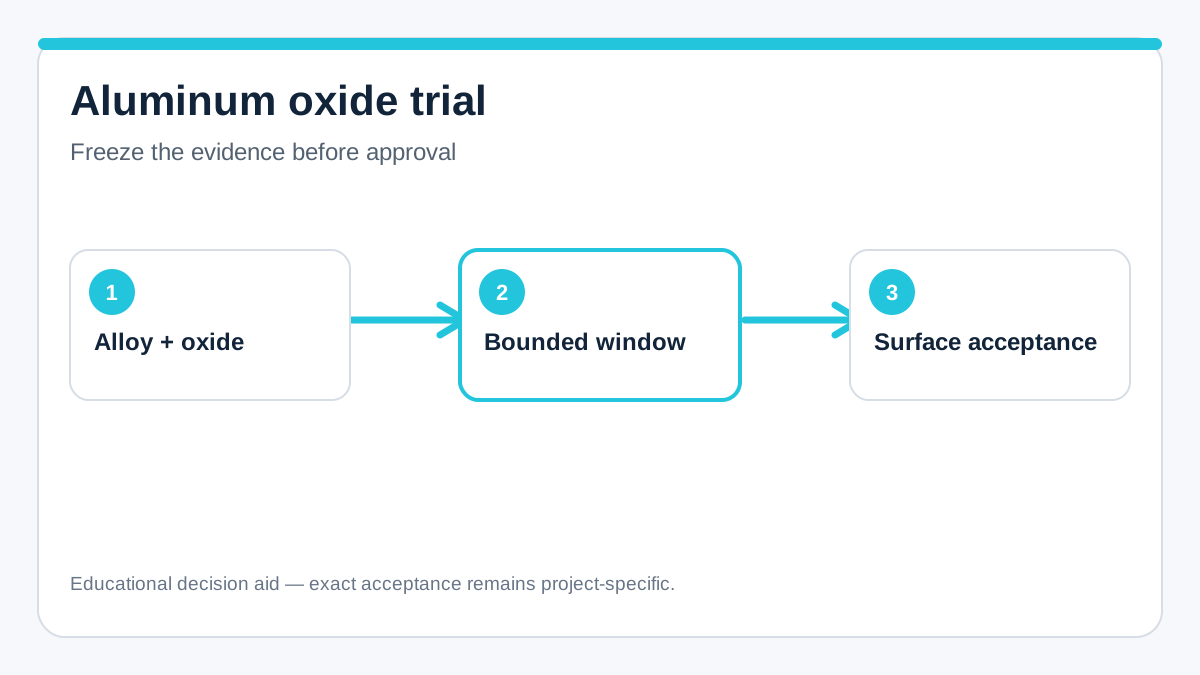
Laser cleaning can remove selected aluminum oxide conditions, but it should not be approved from wattage, a bright coupon or settings copied from another alloy. Record the alloy and temper, product form, native or process oxide, contamination, geometry and downstream operation. Test representative coupons against untreated and current-process controls, then accept only the process window that meets the specified removal and substrate-change limits. Aluminum is reflective and process-sensitive; inadequate energy can leave oxide while excessive exposure can cause melting, ablation, roughness change or secondary oxidation.
Freeze the aluminum alloy, oxide and next operation
‘Aluminum oxide’ may mean a thin native film, thicker thermal oxide, weld-related oxide, corrosion product or a mixed layer containing oil, salts, coating residue or shop contamination. Record what is known and what remains unknown before defining a trial.
Identify alloy and temper, product form, finish, fabrication and heat history, oxide origin and age, storage, contamination, geometry, critical edges and dimensions. State whether the next step is welding, adhesive bonding, coating, electrical contact, inspection or another operation; each needs a different acceptance owner.
A 2022 open-access review of laser-controlled cleaning of aluminum alloys reports that removal and substrate response depend on material and parameters such as power or energy density, pulse width, repetition and scanning. It also notes risks including substrate ablation and secondary oxidation. This supports a controlled trial, not one transferable recipe.
Define removal and substrate acceptance separately
Write two groups of criteria. Removal criteria address the specified oxide or contamination. Substrate criteria address color, texture, roughness, chemistry, oxide regrowth, melting or resolidification, dimensions, edges and the next operation. A clean-looking surface may still fail a welding, bonding, coating, corrosion or electrical requirement.
Select only methods justified by consequence. Visual reference, controlled microscopy, mass or dimensional comparison, surface chemistry, roughness, electrical contact, weld or bond test and corrosion methods answer different questions. The responsible materials and downstream-process owners should define methods, locations, uncertainty and limits before the coupon is cleaned.
| Evidence area | Question | Possible method | Owner |
|---|---|---|---|
| Oxide removal | Was the specified layer reduced to the required endpoint? | Approved visual/analytical comparison | Process or quality |
| Topography | Did texture remain inside the drawing or process window? | Defined roughness/profile method | Design/downstream |
| Thermal or ablation change | Are melt, crater or resolidified features prohibited? | Microscopy and dimensional evidence | Materials/quality |
| Surface chemistry | Does the next operation require a chemical boundary? | Materials-selected surface method | Materials authority |
| Downstream result | Does welding, bonding, coating or contact meet its own rule? | Applicable qualification or test | Process owner |
Build a representative coupon matrix
Use untreated material, the current accepted preparation when one exists, and laser candidates. Include the hardest representative oxide and geometry, not only a convenient flat clean sheet. Label every coupon with alloy, lot or heat where relevant, oxide history, loading, preparation, orientation and test time.
Use repeats appropriate to the decision and variability. A single attractive coupon does not demonstrate repeatability. Preserve failed and over-cleaned coupons because they help bound the process window.
Record handling between cleaning and measurement. Aluminum surfaces can change after exposure, and fingerprints or storage can invalidate a downstream comparison.
Record a bounded laser process window
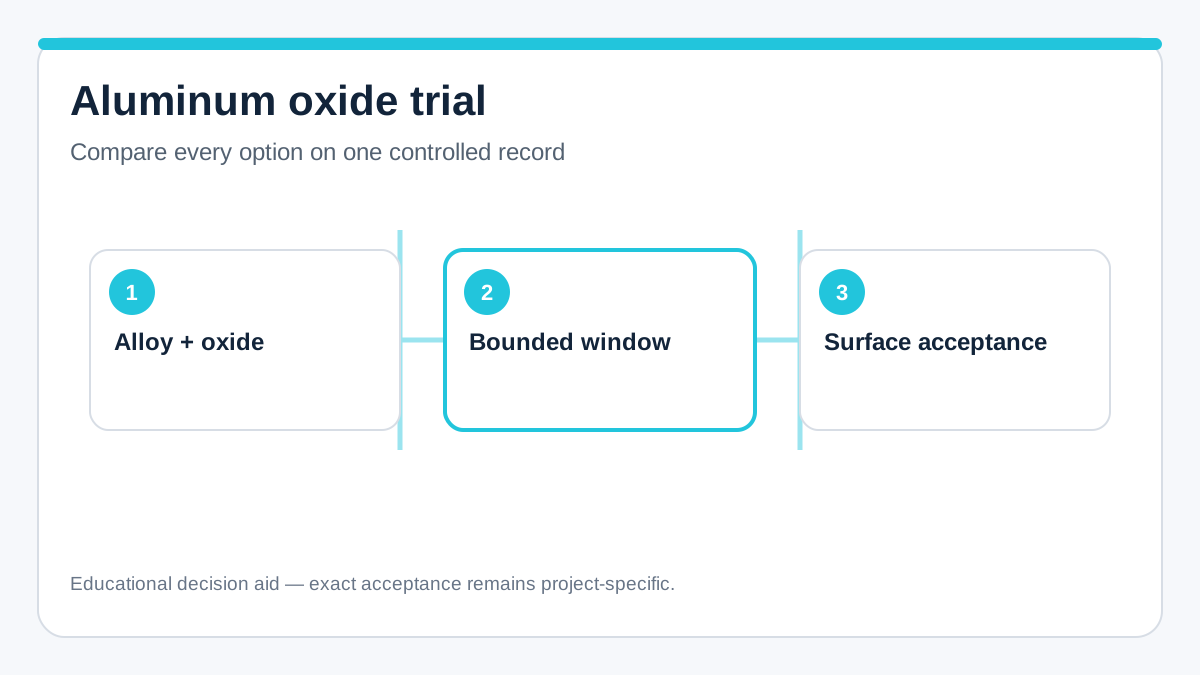
Record source type and wavelength; pulsed or continuous mode; nominal power and pulse energy where applicable; repetition rate; pulse width; spot/focus condition; scanning speed; hatch and overlap; pass count; working distance; path strategy; gas and extraction; part presentation; and measured delivery or calibration evidence available for the system.
A published study on laser cleaning a 7075 aluminum-alloy oxide film reported separate initial and complete cleaning thresholds under its own apparatus. Those values cannot be transferred to a different alloy, oxide, beam, spot or acceptance method. Use published work to identify variables and failure modes, then establish the current system’s window on representative coupons.
Change one planned variable at a time when practical and record under-cleaning, acceptable range and first prohibited substrate change. Do not hide edge, overlap, start/stop or transition-zone behavior behind a central-area result.
Inspect reflectivity, heat accumulation and difficult geometry
Reflective surfaces, curves, thin edges, holes and seams can change delivered energy, angle, focus and plume behavior. The same programmed settings can produce a different result as geometry and heat flow change.
Assess edge rounding, local melting, craters, color, roughness and redeposition at overlaps and corners. For thin or precision parts, add dimensional evidence. If the oxide or contamination contains hazardous constituents, evaluate the plume and waste separately.
Laser hazards and reflected beams require engineered controls, trained personnel and a site-specific risk assessment. This article does not authorize open-beam operation or replace the system manual and local safety requirements.
Make the downstream process the final acceptance gate
For welding, the qualified welding and inspection owner defines whether the surface is acceptable. For adhesive bonding or coating, control the interval, handling and contamination before application, then use the approved adhesion or coating evidence. For electrical contact, measure the property the connection requires rather than relying on brightness.
Use the pre-weld guide when welding owns the decision, and the adhesive-bonding guide when bond preparation owns it. This article owns aluminum-oxide removal and substrate boundaries; it should not duplicate downstream qualification procedures.
Review laser cleaning before weldingRelease only the tested alloy, oxide and window
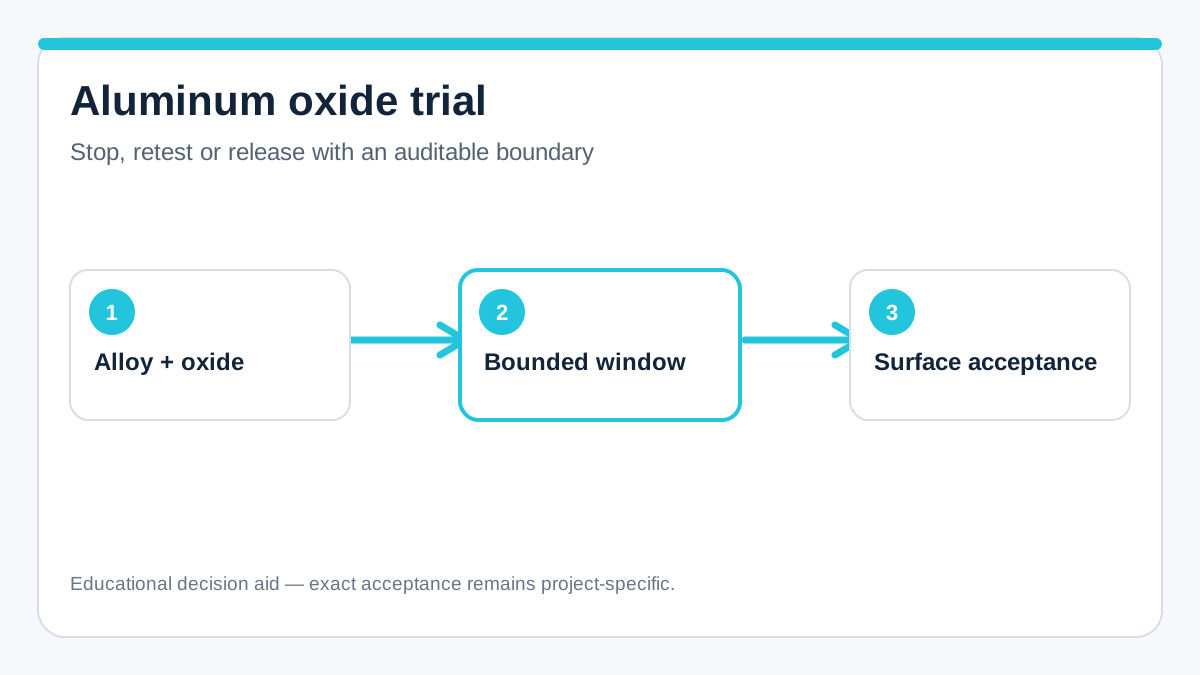
Accept when representative coupons meet all selected removal, substrate and downstream criteria with repeatable settings and controlled handling. Retest when one documented adjustment can resolve a removal margin, variability or geometry-transfer gap. Reject or redesign when required oxide removal needs a process condition that causes prohibited substrate change or cannot meet safety, extraction or throughput constraints.
Prepare the inquiry with alloy and temper, oxide origin and range, photographs, geometry and dimensions, downstream process, current preparation, acceptance methods, restricted areas, throughput target, automation and site constraints. Request raw observations, tested settings, exceptions and transfer limits—not only a cleaned photo.
FAQs
Can laser cleaning remove the natural oxide layer from aluminum?
It can alter or remove selected oxide conditions within a tested window, but the result depends on alloy, oxide, laser and method. Define how removal and substrate change will be measured.
Do the same settings work on every aluminum alloy?
No. Alloy, temper, product form, finish, oxide, geometry and heat flow can change the result. Treat a material or geometry change as a review trigger.
Does a bright aluminum surface prove the oxide is gone?
No. Appearance is one observation. Use the selected chemistry, topography or downstream method when the decision requires it.
Can laser cleaning damage aluminum?
Inadequate or excessive exposure can leave oxide or cause roughness change, melting, ablation, craters or secondary oxidation. A representative coupon matrix should bound acceptable and prohibited conditions.
What should be sent for an aluminum-oxide test?
Send representative alloy coupons or parts, oxide history, geometry, critical dimensions, current process, downstream use, acceptance methods, throughput and site constraints.