Process selection
Laser Cleaning vs Sandblasting for Rust: Cost, Surface Profile & Throughput
Compare laser cleaning vs sandblasting for rust by surface result, geometry, throughput, containment, consumables, waste and total workflow.
11 min readBy LaserLuma technical team
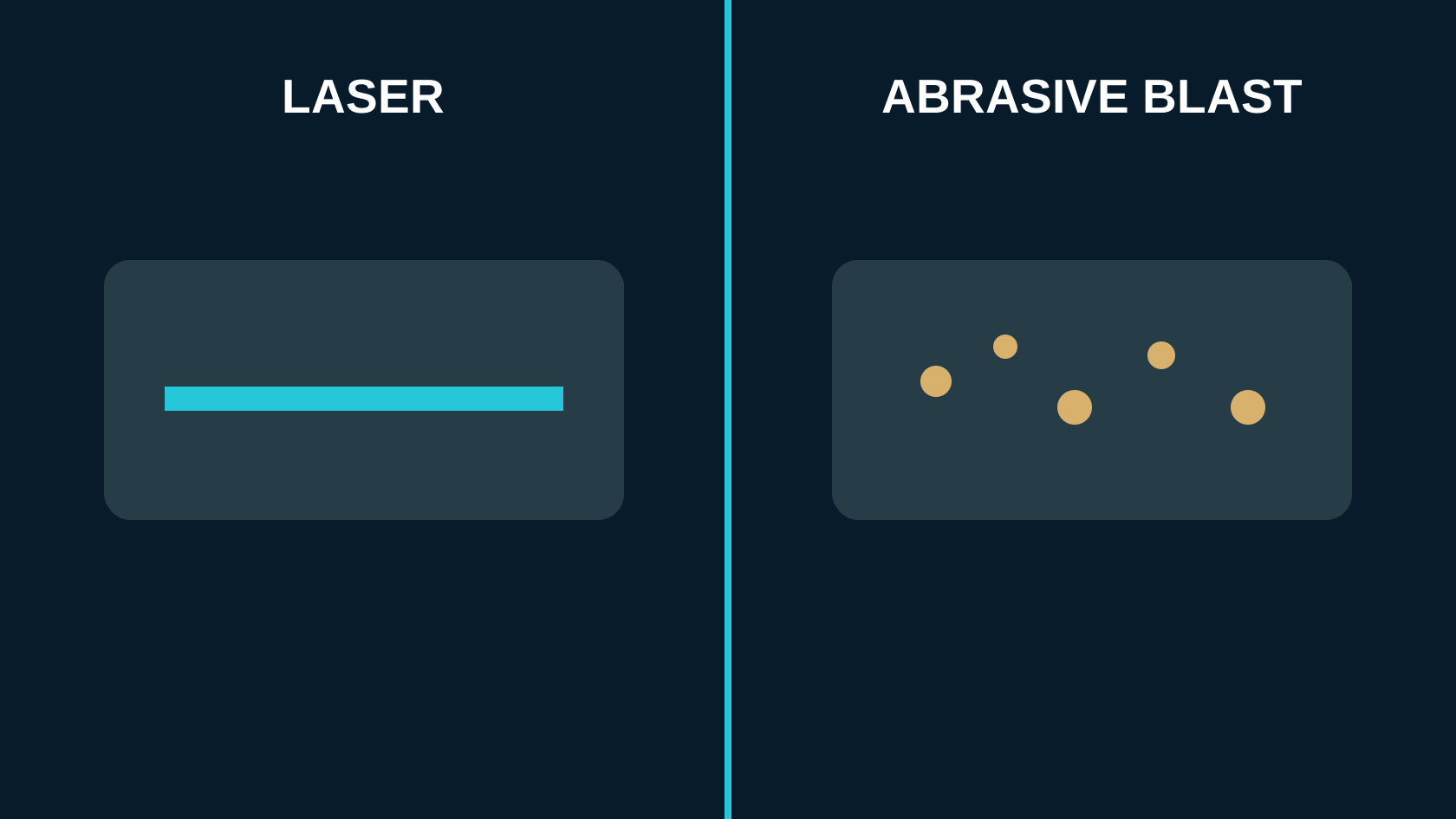
Reviewed August 13, 2026. Laser cleaning and abrasive blasting remove rust by different mechanisms. Laser cleaning applies controlled optical energy and can support localized, selective work; abrasive blasting propels media and can create a defined mechanical profile over suitable areas. Neither is universally faster, cheaper, safer, or better. The correct choice comes from the base material, layer, geometry, required surface, throughput, containment, downstream process and a representative acceptance test.
Start with the required surface, not the tool
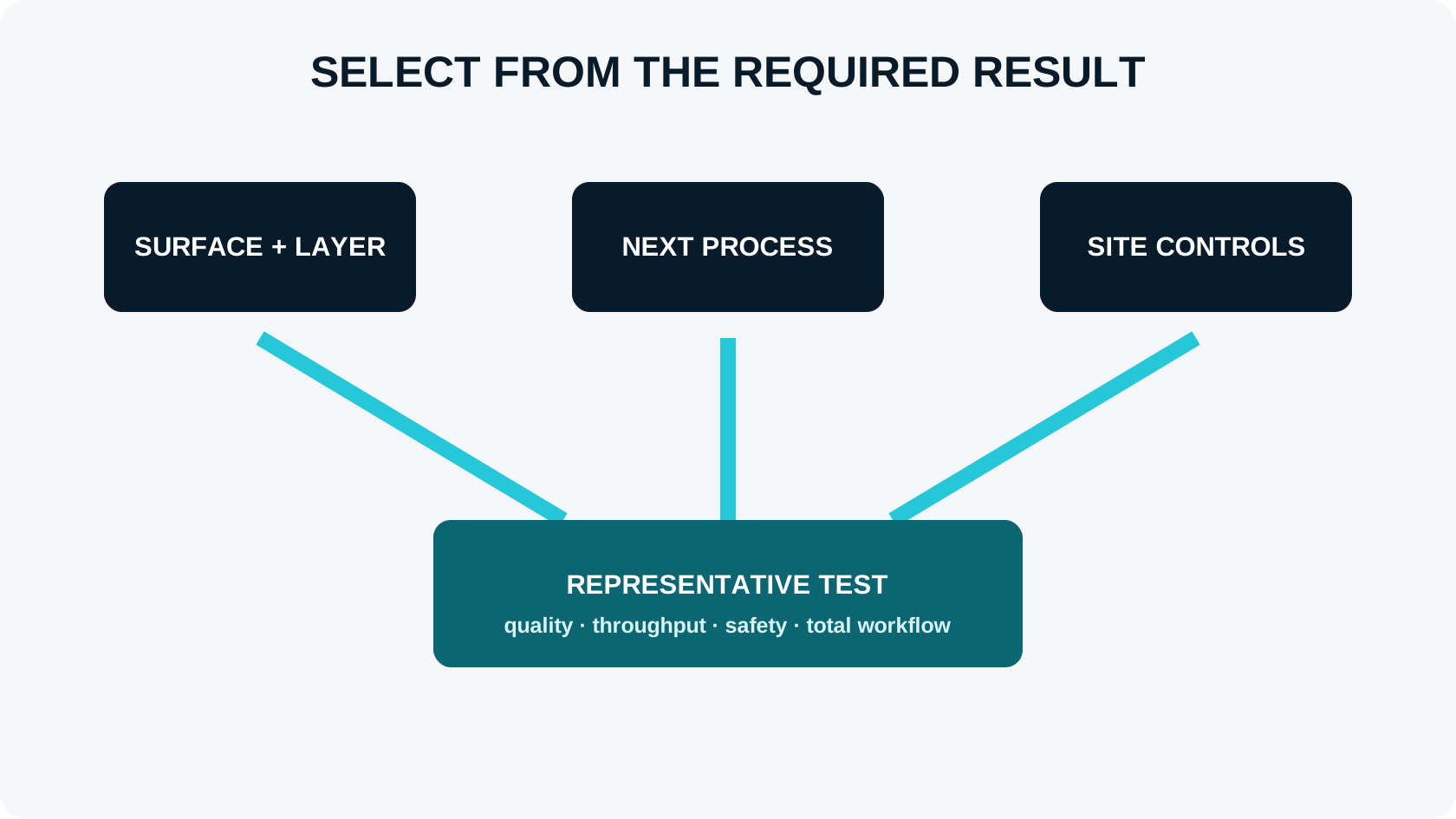
Record the metal, thickness, rust and scale condition, oils, salts, coatings, pits, edges, cavities and area per shift. Then define what happens next: painting, welding, bonding, inspection or maintenance. Each downstream process may own a cleanliness, profile or chemistry requirement.
A clean-looking coupon does not prove a production-ready surface. The coating owner, welding procedure or other downstream authority should define acceptance and review representative test pieces, including difficult and worst relevant areas.
How the two processes differ
Laser cleaning heats and removes or transforms a surface layer along a controlled scan path. Process response changes with wavelength, pulse/CW mode, energy delivery, overlap, speed, focus, layer and base metal. It can be attractive for localized zones, detailed geometry, repeatable automation or work where abrasive media is undesirable—after validation.
Abrasive blasting accelerates media against the surface. Media, size, hardness, pressure, angle, distance and dwell affect removal and profile. It can be effective across robust structures and large accessible areas, but requires media handling, containment, dust control and cleanup appropriate to the material and site.
Compare the complete production workflow
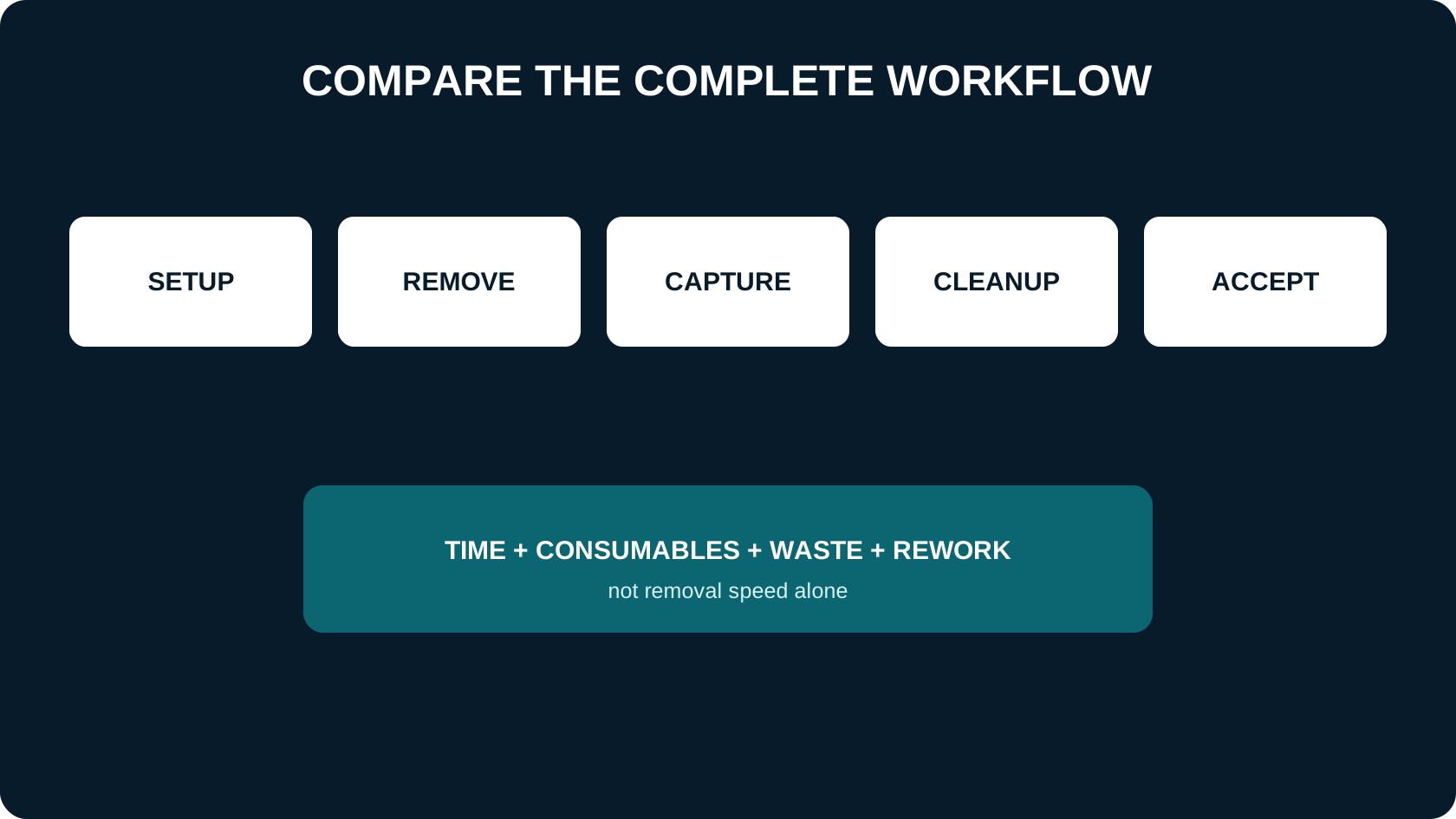
Do not compare only square metres per hour during active removal. Time setup, masking, part handling, media or filter changes, containment, cleanup, inspection, rework and transfer to the next process. A localized laser job may avoid media cleanup; a large open structure may favour an established blast workflow. The answer changes with scale and facility.
The cost boundary should include equipment, energy, media, filters, extraction or blast ventilation, enclosure, PPE programme, labour, waste characterization/disposal, maintenance, replacement optics/nozzles, compressed air where used, floor space and downtime.
| Decision point | Laser-cleaning trial hypothesis | Abrasive-blasting trial hypothesis |
|---|---|---|
| Localized/detail work | Controlled scan around features may reduce collateral treatment | Masking and nozzle access must be practical |
| Large robust area | Automation and workflow must prove required throughput | Established broad-area blasting may be efficient |
| Required profile | Measure whether the laser recipe creates/retains the accepted surface | Select media and parameters for the specified profile |
| Containment | Control beam, reflections and airborne plume | Control media, dust, rebound and visibility |
| Waste | Captured removed material and used filters | Spent media plus removed contamination |
| Best proof | Representative part with full cycle and downstream acceptance | Representative part with full cycle and downstream acceptance |
Safety systems are different, not absent
Laser cleaning requires controls for hazardous laser radiation and reflections, plume extraction, fire, electrical hazards, access and training. Abrasive blasting requires controls for airborne contaminants, media rebound, pressure systems, noise, visibility, ergonomics and respiratory exposure. OSHA's abrasive-blasting resources emphasize ventilation and respiratory protection requirements for relevant operations.
The hierarchy of controls applies to both: reduce hazards where possible, engineer enclosure/ventilation and access controls, establish procedures and training, then specify task-appropriate PPE. A method should not be called “safe” without the site-specific system.
Evidence: OSHA abrasive blasting overview · OSHA laser hazards
Use a side-by-side acceptance trial
Prepare representative and worst-relevant samples. Freeze the incoming condition, area, geometry and acceptance criteria. Record setup, process settings, active time, handling, containment, cleanup, consumables, waste, inspection and rework for each route.
Measure the outputs that the next process needs. Depending on the job, that may include visual condition, residual contamination, surface profile, roughness, temperature or distortion, coating adhesion or weld acceptance. Do not transfer a supplier's best coupon setting to a different material without another trial.
- Use the same incoming surface and accepted endpoint.
- Include edges, pits, seams and access limits.
- Count the full cycle and all consumables/waste.
- Have the downstream process owner sign the result.
- Keep the selected recipe and controls under change control.
A practical selection rule
Trial laser cleaning first when the work is localized or detailed, abrasive media is difficult to manage, selective removal matters, or automation could repeat a validated path. Trial abrasive blasting first when a compatible, defined mechanical profile is central and the facility already supports safe, efficient broad-area blasting.
Consider a combined workflow when different zones or layers need different treatments. LaserLuma's <a href="/sample-testing/">sample-testing path</a> can document the laser side of the comparison; the buyer should compare it with the existing blast process on the same acceptance boundary.
Request a representative laser testFAQs
Is laser cleaning better than sandblasting for rust?
Not universally. Laser can suit localized or selective work; blasting can suit compatible broad-area/profile requirements. Test the real job.
Which process is faster?
Measure the complete cycle including setup, removal, handling, containment, cleanup, inspection and rework. Active removal speed alone is insufficient.
Does laser cleaning create a surface profile?
Its effect depends on material and recipe. Measure the result against the downstream specification rather than assuming it matches blasting.
Does laser cleaning produce waste?
Yes. Removed material is captured in extraction and filters, which require characterization, maintenance and disposal.
Can the processes be combined?
Yes, when different zones or requirements benefit from different treatments, provided the final surface and safety controls are validated.