On-site deployment
Portable vs Continuous Laser Cleaning On Site: Choose by Power, Access and Mobility
Choose a portable or continuous laser cleaning setup for an on-site job by job mobility, on-site power availability, access constraints and rent-vs-buy logistics.
9 min readBy LaserLuma technical team
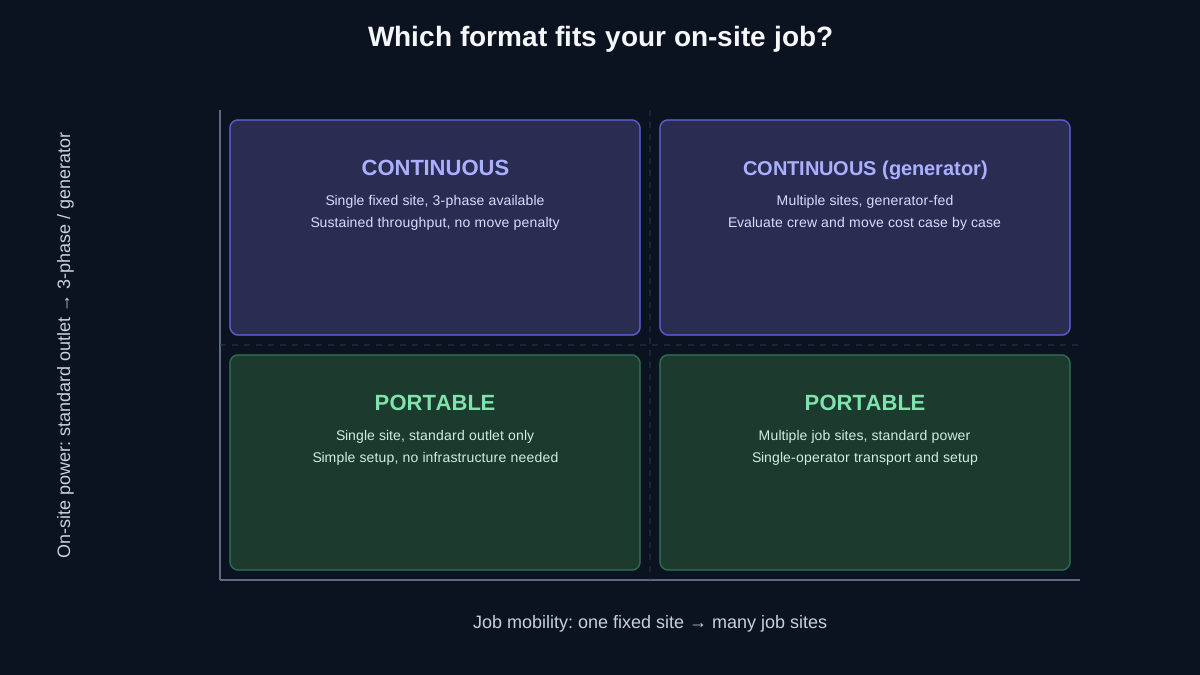
Choose a portable or handheld setup when the job moves between multiple sites, the work area has confined-space or awkward-geometry access, or the site only offers standard single-phase power. Choose a continuous or fixed-line setup when the job is a single, large-area site with sustained heavy contamination, the site can supply three-phase power or a generator sized for it, and the job justifies the extra weight, cooling infrastructure and crew needed to run it. Many contractors end up owning or renting both. This is a deployment-logistics decision, not a cleaning-physics one, and it does not require deciding pulsed versus continuous-wave energy delivery first.
Two different questions: which process, and which format
It is easy to confuse two separate LaserLuma guides because they both use the words pulsed, continuous and portable. They answer different questions. LaserLuma's pulsed vs continuous laser cleaning process guide helps you decide which energy-delivery mode to test first on a sample, based on the layer, substrate, heat sensitivity and required surface result -- a material-response question you answer with a sample test.
This guide answers a different question. Once you know, or are willing to test, what the laser needs to do, which physical equipment format -- a portable or handheld unit, or a continuous or fixed-line unit -- should you actually bring to an on-site job, based on how the job site itself is set up. If your open question is whether the process will damage your substrate, start with the process guide. If your open question is whether you can even run the machine at this job site, and whether to rent or buy it, this guide is the one you want.
Read the pulsed vs continuous process guideJob mobility: one fixed site or many job sites
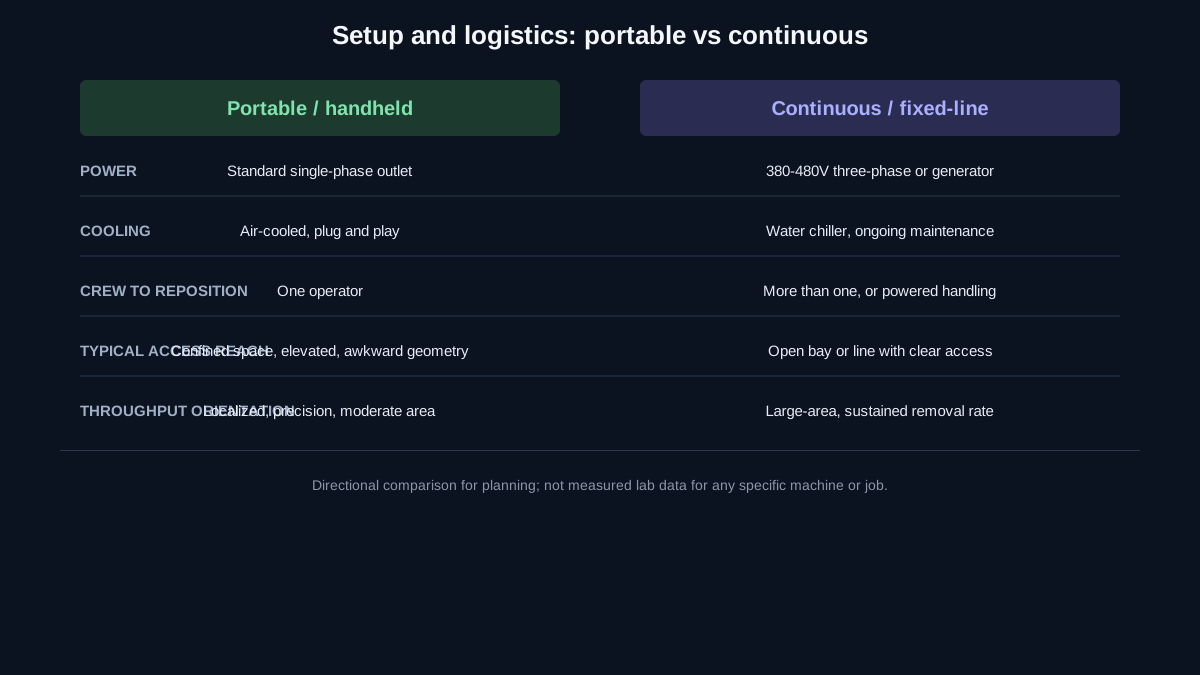
The first question is not power or access -- it is how often the equipment needs to physically move. A contractor doing call-out work across multiple customer sites in a week needs a format a single operator can load, transport and set up quickly at each stop. Portable units are commonly designed for exactly that, while a continuous unit plus its chiller is commonly heavy enough that repositioning it between sites needs more than one person or powered material handling.
A single fixed site -- a production line, a maintenance bay, a permanent cleaning station -- removes the repositioning penalty entirely, which is when a continuous system's other advantages, such as sustained throughput and heavier contamination load, can be evaluated on their own merits rather than being ruled out by mobility alone.
Evidence: StyleCNC, "Start a Mobile Laser Cleaning Business: Setup and Profit"
What the job site can actually supply
Confirming site power before committing to a format is not optional. A crew that shows up with a continuous system only to find the site has no three-phase supply and no generator has lost the day's job, not just made a suboptimal choice.
| Job site power | Typical starting format | Why | Confirm before committing |
|---|---|---|---|
| Standard single-phase outlet only, no upgrade planned | Portable / handheld | Lower-power pulsed units are commonly designed to run on standard single-phase 110-240V power | Actual outlet rating and circuit capacity at the specific work location |
| 380-480V three-phase available, or a generator sized for it | Continuous / fixed-line | Higher-power water-cooled continuous systems, commonly cited from roughly 1,500W and up, typically require three-phase supply | Total facility power draw, including cooling, control and fume-extraction load, not just laser-head wattage |
| Power availability uncertain or varies by site | Portable / handheld, evaluate case by case | Portability removes the power-infrastructure dependency as a blocking risk; a generator-fed continuous setup is possible but adds its own logistics | Whether a generator adequate for a continuous system's total draw is realistically available and permitted on site |
Evidence: Cloudray Laser, "Pulsed vs. Continuous Wave Laser Cleaning" · Laser Clean Expert, "Do You Need 3-Phase Power for Heavy-Duty Laser Cleaning?"
Access: confined spaces, elevation and awkward geometry
Handheld operation permits entry to confined, elevated or awkward-geometry work areas that a larger fixed-line system cannot physically reach or be positioned in. A single operator can carry a portable unit's head into a tank, a pipe run, scaffolding, or a tight equipment bay where there is no room for a fixed-line system's larger footprint, its chiller, or the clearance a rigid installation would need. This access advantage holds even when the site has adequate power for a continuous system -- access and power are independent constraints, and either one alone can force a portable choice.
Conversely, a continuous system's larger, less maneuverable footprint is rarely a problem when the work area is a single open bay or line with clear access on all sides. In that setting, access does not favor either format, and the decision falls back to power availability and throughput.
Evidence: WorkVenture, "Best Portable Handheld Laser Cleaning Machines"
Surface area and throughput
Continuous-wave systems are commonly suited to large-area, heavy-contamination industrial cleaning where higher heat input is acceptable and sustained removal rate matters most. Portable pulsed units are commonly preferred for delicate or heat-sensitive substrates and for precision, localized work rather than broad-area coverage.
As a general orientation figure, mobile portable operations are commonly cited around 10 to 25 square meters per hour on moderate rust for a single operator -- a starting reference for job-duration planning, not a guaranteed rate for any specific contamination load or substrate.
Evidence: Senfeng Laser, "Pulse vs. Continuous Wave Laser Cleaning Machines" · StyleCNC, "Start a Mobile Laser Cleaning Business: Setup and Profit"
Read the robot cycle-time guideSetup, cooling and crew
Pulsed and portable units at lower power are commonly air-cooled and plug and play, with no separate coolant system to manage -- a meaningful advantage for a crew moving between sites on a tight schedule. Continuous or higher-power units commonly require a separate water chiller, which adds weight, plumbing and ongoing maintenance: coolant level, freeze protection in cold climates, filter changes and condensation management.
None of this makes a continuous system harder to own outright. It shifts which checks a crew needs to build into daily setup and teardown at each site, and it is one more reason a single fixed installation suits continuous systems better than a rotating multi-site schedule.
Evidence: Cloudray Laser, "Pulsed vs. Continuous Wave Laser Cleaning"
Rent or buy, and what it costs to move
Renting lets a buyer test different formats and power levels under real job conditions before committing to a purchase, and rental services commonly include basic setup guidance to get started quickly. Buying tends to become more economical over time for a format used regularly, and it removes the availability and booking wait that comes with rental scheduling.
For a contractor whose jobs vary in mobility and power access week to week, renting both a portable and a continuous unit for a defined trial period is a reasonable way to gather real cost-per-job data before choosing what to own.
Evidence: Wintek Laser, "Handheld Laser Cleaning Machine: Should You Rent or Buy?"
Request a quoteSend a job-site data pack
Send the same data pack for every job so the recommended format, and whether to rent or buy, can be compared on the same basis rather than a generic model name.
- Job mobility: one fixed site, or multiple job sites over the contract period.
- On-site power: standard single-phase outlet, 380-480V three-phase, or generator availability and rating.
- Access constraints: confined space, elevated work, or awkward geometry the equipment must fit into.
- Surface area and contamination load: approximate area per shift and contamination type.
- Rent-or-buy preference: trial rental period, or a purchase decision already made.
- Crew: number of operators available to set up, run and reposition the equipment.
FAQs
Is a portable or continuous laser cleaner better for on-site work?
Neither is universally better. Portable or handheld units suit multi-site mobility, confined or awkward-geometry access, and standard single-phase power. Continuous or fixed-line units suit a single site with sustained heavy contamination and available three-phase power.
What power supply do I need on site for a continuous laser cleaning machine?
Higher-power, water-cooled continuous systems, commonly cited from roughly 1,500W and up, typically require 380-480V three-phase power. Confirm the site's actual circuit capacity, plus the total draw from cooling, control and fume extraction, before committing to a continuous setup.
Can a portable laser cleaner handle a large industrial cleaning job?
It can, but expect a slower area-coverage rate than a continuous system on heavy contamination. Portable operations are commonly cited around 10 to 25 square meters per hour on moderate rust for a single operator -- useful for planning job duration, not a guarantee for every substrate or contamination level.
Should I rent or buy a laser cleaning machine for on-site work?
Renting lets you test formats and power levels under real job conditions before committing. Buying tends to be more economical over time for a format you use regularly and removes rental booking and availability waits. Job frequency and mobility pattern should drive the decision, not price alone.
Is this the same question as pulsed vs continuous laser cleaning?
No. That is a process or material-response question -- which energy-delivery mode to test first on a given substrate -- answered by LaserLuma's pulsed vs continuous laser cleaning process guide. This guide is a deployment-logistics question -- which physical equipment format to bring to a given job site, based on mobility, power, access and rent-vs-buy economics.