Robot cleaning production planning
Robot Laser Cleaning Cycle Time: Count Handling, Inspection and Recovery—not Just Beam Time
Check robot laser cleaning cycle time using named start/end events, concurrent handling, inspection releases and recovery records before an automation enquiry.
7 min readBy LaserLuma technical team
Published
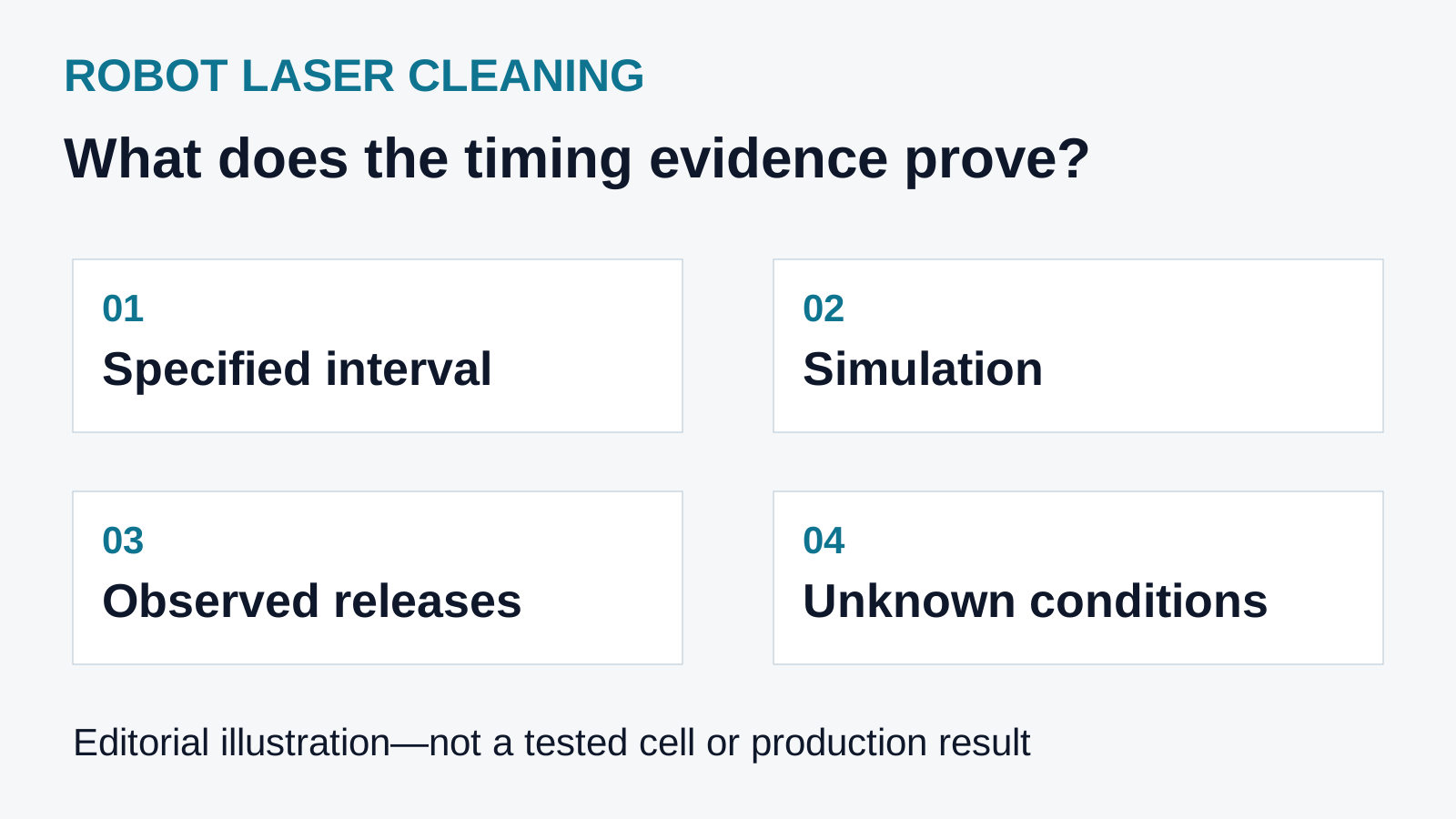
Robot laser cleaning cycle time is useful for production planning only when the number has named start and end events and includes the work that determines accepted output. A beam-time result, a table-indexing specification and a simulated robot sequence answer different questions. Before comparing a quotation with your production target, identify what was timed, which operations can genuinely overlap, and whether inspection, handling and recovery remain inside the reported observation window.
Ask which clock the quoted number came from
Start with the number in the proposal, not a longer list of tasks. Ask the supplier to label it: a specified machine movement, a timed cleaning pass, a simulated sequence, or an observed interval between accepted parts. Then ask for its start event, end event and part or configuration reference. Without those details, two apparently comparable figures may describe different portions of the work.
A useful example is Laserax's rotary-machine specification sheet. It lists a 3-second revolving duration. That is a stated indexing operation, not evidence that a part can be loaded, cleaned, inspected and released every three seconds. The distinction matters even if the specification itself is accurate: a sub-operation cannot establish the duration of all the other work. The figure belongs to the cited Laserax document, not to a LaserLuma machine.
Evidence: Laserax rotary specification: revolving duration, technical-specifications page.
Simulation is another category. Laserax's robot-cleaning page separately describes part testing, a test report and simulation of a robot cleaning sequence. A proposed sequence can help frame the timing question, but calling a number “simulation time” does not reveal which loading, inspection or control events the model contains. Request the modeled sequence and assumptions. Do not relabel it as an observed production result, or assume that an event is included merely because it occurs in the real cell.
Evidence: Laserax robot loading and simulation description
A named project reference can establish context without providing a usable time study. Siemens describes a Laserax rotary-station project completed in 2020, with a cycle-time objective and camera validation. That public reference does not supply a measured full-cell interval, observation window or recovery record. It is evidence that cleaning and validation were considered together in that project—not a transferable capacity figure for another part or supplier.
Evidence: Siemens 2020 Laserax project reference
| Evidence supplied | What you can take from it | What remains to be established |
|---|---|---|
| A named movement specification | The stated duration of that operation under the document's scope | The rest of the sequence and accepted-output interval |
| A simulation result with its model | A predicted sequence under the declared assumptions | What happens on the delivered configuration with actual parts and interruptions |
| A qualitative project reference | The described application and validation approach | Measured timing, release counts and the conditions behind the result |
| A timestamped, part-linked release record | What was observed during its declared window | Whether unobserved shifts, part mixes or exceptions behave similarly |
Keep the evidence label next to the number as it moves into an RFQ or comparison sheet. “Not yet measured” is a useful status. Replacing it with an attractive estimate hides the next question the supplier needs to answer.
Follow the part and the shared resources on the same timeline
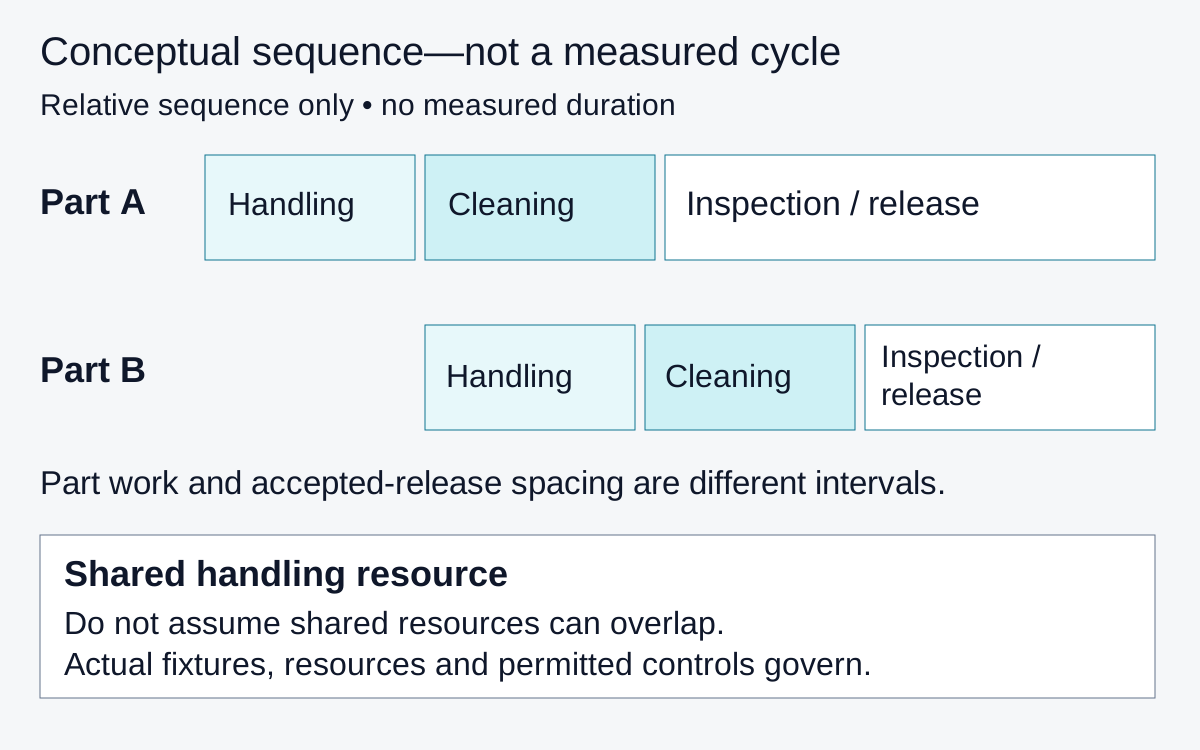
Once the evidence type is clear, follow two things: the work performed on one part, and the interval until the next accepted part leaves. They need not be equal. One part may still be moving through cleaning and inspection while another is being presented to the cell.
Laserax describes door, conveyor and rotary loading arrangements; in its rotary arrangement, loading and unloading can occur while another part is cleaned. That supports the possibility of overlap in a named architecture. It does not prove that every robot cell can run those operations simultaneously, or that its handling, inspection and control resources are independent.
To check a proposed overlap, place the relevant events on one timeline and name the resource each event occupies. If loading and unloading require the same robot, those actions cannot simply be treated as independent because they appear in different rows of a spreadsheet. If inspection must release a fixture before its next index, retain that dependency. If the inspection result is needed before a part can be counted as accepted, show that release event as well as the end of laser processing.
This is where two opposite errors appear. Adding every activity duration can count simultaneous work twice. Taking only the longest activity can omit transfer, waits or shared-resource work that cannot overlap. Use the actual event sequence to explain the reported interval; do not select whichever shortcut produces the smaller figure.
The quality requirement stays fixed during this comparison. The existing surface-acceptance guide explains how that requirement is defined for paint removal; this article does not replace it. A quicker release obtained by dropping a required inspection is not a comparison of the same accepted result. Likewise, a timing exercise is not permission to bypass an interlock, extraction requirement or approved operating procedure.
Use the existing surface-acceptance guideReconcile the observation window with accepted parts
For an observed result, the numerator and denominator need to describe the same window. Record when observation starts and stops, which parts are inside it, and which event counts as acceptance. Keep a completed cleaning pass, a failed inspection and a later accepted rework result as separate events tied to the same part identity. The part should enter the accepted-output count once, when the defined release occurs.
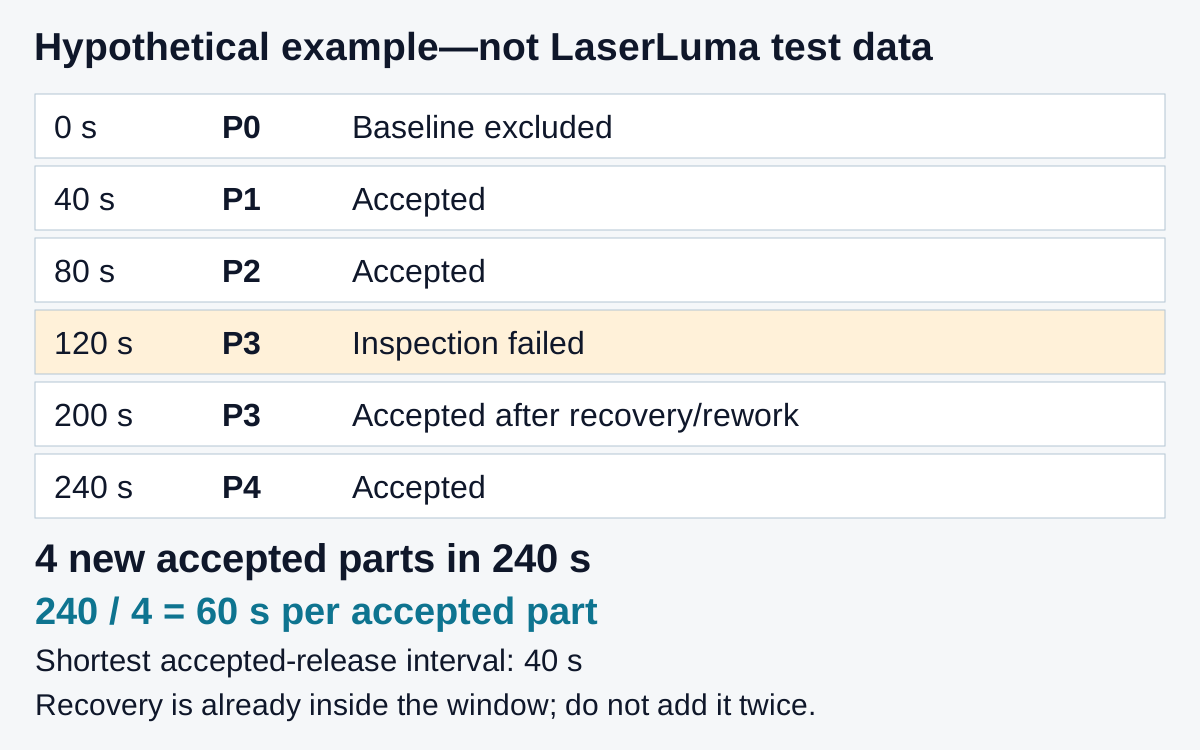
Consider this hypothetical editorial example—not LaserLuma test data. Observation begins immediately after a baseline part, P0, is released at time zero. Four additional parts are accepted by 240 seconds. One of them fails inspection before being released later after recovery and rework.
| Time from start | Part | Recorded event | New accepted-output count |
|---|---|---|---|
| 0 s | P0 | Baseline release; outside the new-output count | 0 |
| 40 s | P1 | Accepted release | 1 |
| 80 s | P2 | Accepted release | 2 |
| 120 s | P3 | Cleaning finished, but inspection failed | 2 |
| 200 s | P3 | Accepted after recovery and rework | 3 |
| 240 s | P4 | Accepted release | 4 |
The observed window contains four new accepted parts in 240 seconds, or 60 seconds per accepted part. Some adjacent accepted releases are only 40 seconds apart. Reporting just that fastest interval would leave out the longer gap between P2 and P3. Counting the failed inspection at 120 seconds as a fifth accepted part would change the result for the wrong reason.
Recovery and rework are already inside the 80–200-second interval. Adding their elapsed time again to the same 240-second window would double-count it. Keep event detail so the gap can be investigated, but do not confuse explaining the elapsed time with adding more time to an already inclusive measurement. This example deliberately assigns no separate fault or repair duration; it cannot tell you which corrective change would improve the cell.
Required takt is the available production time divided by the required accepted quantity. Compare it with observed output using consistent time boundaries. If one side excludes changeover and the other includes it, disclose and reconcile that difference before declaring that the target is met. Do the same for inspection performed outside the observed station: cleaning completion alone does not establish that those parts have passed the required check.
A short trial may contain no fixture change, replenishment delay or fault. That does not make those events zero in future production. State what the window covered and leave unobserved conditions open. The appropriate next step is representative evidence for the intended part mix and operating conditions, not an invented universal efficiency percentage or an unsupported promise that the fastest cycle will repeat all shift.
Take the missing evidence into the automation discussion
The timing review should now identify a specific gap. Perhaps the proposal supplies only an indexing specification. Perhaps its simulation omits the inspection release. Or perhaps the trial record is complete but covers one part type without the changeover required by your schedule. These are different questions and should not be combined into a vague request for a “faster laser.”
Carry that gap, the relevant part information, the required accepted output and the original timing evidence into the application discussion. Keep measured values, supplier specifications, modeled assumptions and unknowns visibly separate. LaserLuma's automated-cleaning application scope is the relevant place to discuss part presentation and cell requirements; this guide does not establish a tested cycle, a particular available configuration or guaranteed production capacity.
Review the automated laser cleaning application scope Compare robot, gantry and manual laser cleaning staging